Lies My TV Taught Me

“The Wild West didn’t have much in the way of forensics; when you saw the bullet hole you’d say, ‘That’s prob’ly what kilt ‘im’.”P.K. Vandcast

My recent trip to Texas got me chasing a pig trail looking for a “Western” rabbit hole.

I am from a generation that learned Wild West history on the “Silver Screen”, both the large one and the smaller one. Many of the producers of Wild West movies and TV programing learned theirs from “dime novels”, the forerunner of comic books, written about Wild West heroes and outlaws alike, and Buffalo Bill’s Wild West Show which opened to European audiences in 1887. Much that was learned was not actual history.

I admit I also learned Wild West history through authors like Max Brand and Zane Grey. Later I would add Louis Lamour and Elmore Leonard to my list of western authors read. Since…James Lee Burke’s Holland family series has made the list.

Unfortunately, most of that history, while founded on ‘glimpses’ of the real West, is based upon romanticized lies…romanticized because the truth can be quite boring.

William F. Cody, Buffalo Bill, had firsthand knowledge of the West, he was a rider for the Pony Express, an American soldier, bison hunter, and army scout. He even won a Medal of Honor in 1872. It was revoked in 1917 due to a change in military regulations. The medal was won for gallantry, but Army Scouts were “civilian” scouts. It, along with four others, was restored in the 1980s.

Poster from PBS’s American Experience

More to my point, Cody was a showman and knew what was needed to sell tickets. He sold a lot of tickets. His show would run for thirty years, mostly to sold out crowds, even though Cody had to have help mounting his horse during his later years. The show would tour Europe eight times.

The show featured gun fights, bank robberies, cattle drives, battles with Native Americans and a Wild West version of “Ben Hur’s” chariot race, with chuck wagons. Like any good Wild West show, the good guys always won…usually shooting down a “dark hat” with a six gun.

As many as one thousand actors participated in the three or four hour show and included the likes of Ned Buntline, Annie Oakley, Calamity Jane, Wild Bill Hickok, and Black rodeo star, Bill Pickett. Unlike the early movies, real Plains Indians and other Native Americans were employed, along with many women and Mexican cowboys. Sitting Bull, Geronimo, Chief Joseph, and Red Cloud, all toured with the show. Cody was in some ways an equal opportunity employer.
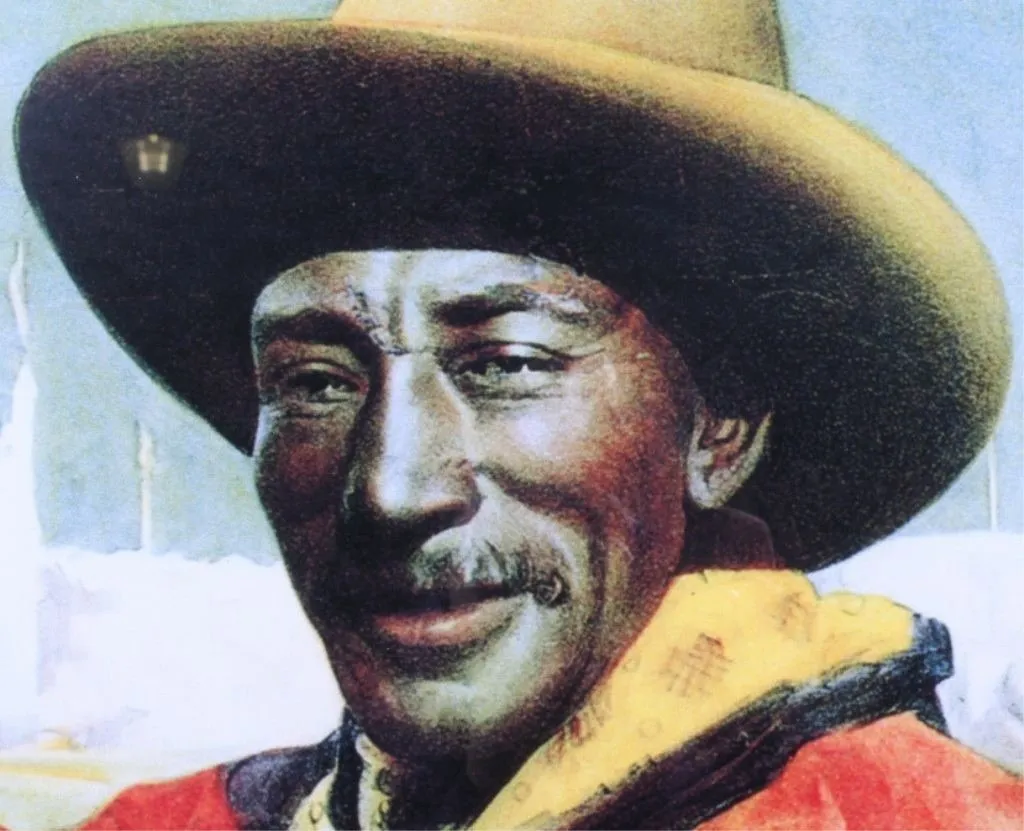
Rodeo star Bill Pickett-Trend Magazine

His show, along with the print media of the time would go on to influence the motion picture industry during its infancy and to a certain extent still does. The romantic Old West is still portrayed today and is just as inaccurate. Lies build upon lies. This is true of the smaller screen, TV, too.

The first motion picture ever made although that is disputed, was “The Great Train Robbery, a1903 American silent Western film made by Edwin S. Porter for the Edison Manufacturing Company. During the radio days, pre-TV, Saturday Matinees featured westerns. In 1949 the first western debuted on TV, The Hopalong Cassidy Show. By 1959 there were thirty western TV shows and another fourteen aired the following year.
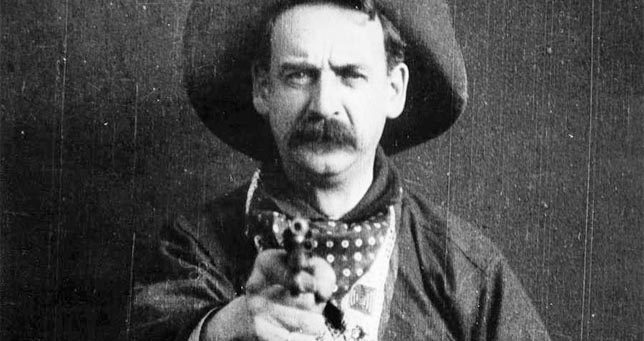
Frame from the Great Train Robbery

Most of those shows featured the steely eyed hero rather than working cowboys, Rawhide and a few others excepted. “Good Guys with a Gun”, square jawed, squinting eyes and a bedrock sense of what is right and wrong…and a way to enforce the right…the six gun. Matt Dillon facing the gunslinger at High Noon. Every Friday night, on TV, the bad guy drew first, and Matt still sent him to his just desserts.

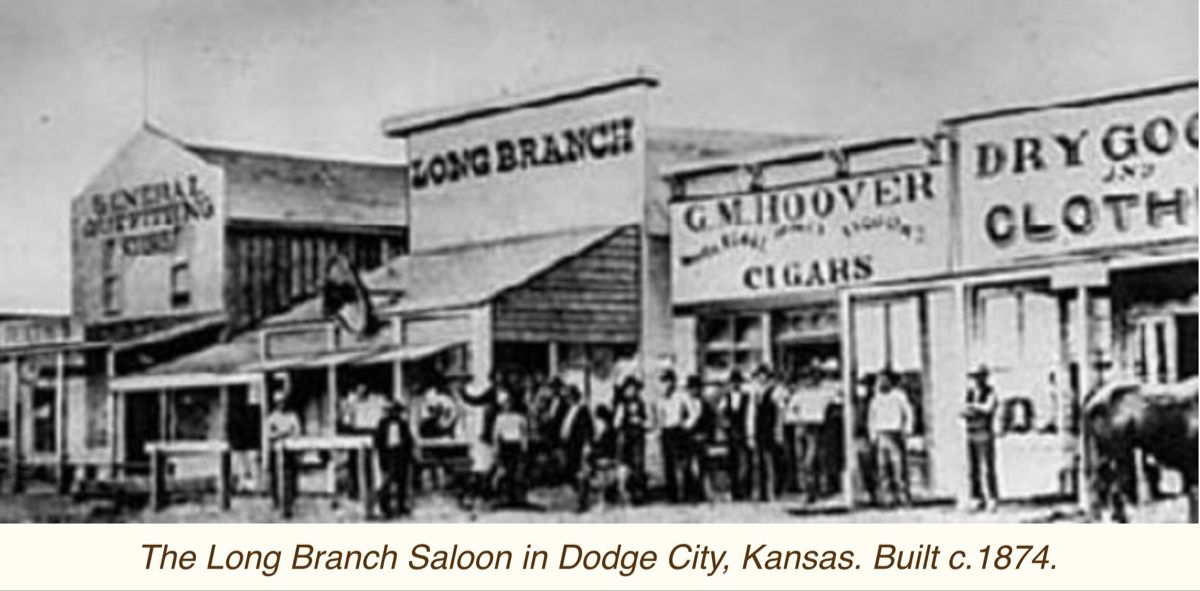
Actual gunfights in the Old West were exceedingly rare, few and far between despite what we would like to believe. Fewer gunfights took place in the middle of the street at high noon. In the cow town of Dodge City, there was only one. There were shootings at the famous Long Branch Saloon but there were no “rules”. Men didn’t face off in the street at twenty paces and the quickest draw didn’t always win.
The famous Gunfight at the OK Corral didn’t take place at the OK Corral, but in a vacant lot behind it. According to all accounts, it lasted about thirty seconds, a gunfight between the bad guys and the not quite so bad guys. Good and bad were not always clearcut in the Old West.

Gunfights were violent affairs where not one, but several gunshots were usually fired. Six shooters were wildly inaccurate. Often onlookers were hit. And unlike in the movies, easy shots were often missed. Often the two shooters just continued firing until they had completely emptied their pistols and called it a day. If no one was hit, drinks might follow with a lot of backslapping. “Belly up to the bar, boys.”

Gun slingers weren’t even called gun slingers. The more authentic terms for the period would have been “gunman”, “pistoleer”, “shootist,” or just “bad man.” The term gunslinger wasn’t used until the 1920 movie, Drag Harlan. The term was adopted by Western writers and movie makers after the fact.

Most experts on the Old West also agree, it was not the “fastest gun” who won. Most gunfights went to the more accurate shot with the coolest head. Those same historians also agree, if you were shot dead it was probably with a rifle or a shotgun…and likely from behind. Like today, long guns, repeaters like the Henry or Winchester, were preferred because of range, accuracy, and rate of fire.

Still, many associate the American West with the “good guy” with a gun, the lone knight in black instead of shining armor ala Paladin in “Have Gun, Will Travel”. A Colt Single-Action tied down against his thigh instead of a sword. Overall, they are both myths, even though with most myths…there are kernels of truth.

Don’t get me wrong, I love Westerns. “High Noon” with Gary Cooper’s Will Kane I consider to be the greatest Western ever put on film…maybe the greatest film period.  Man versus man, man versus elements, man versus himself. A moral dilemma, stay and fight or take his new bride and run. Kane is loyal, brave, and prideful…even when abandoned by his own town.
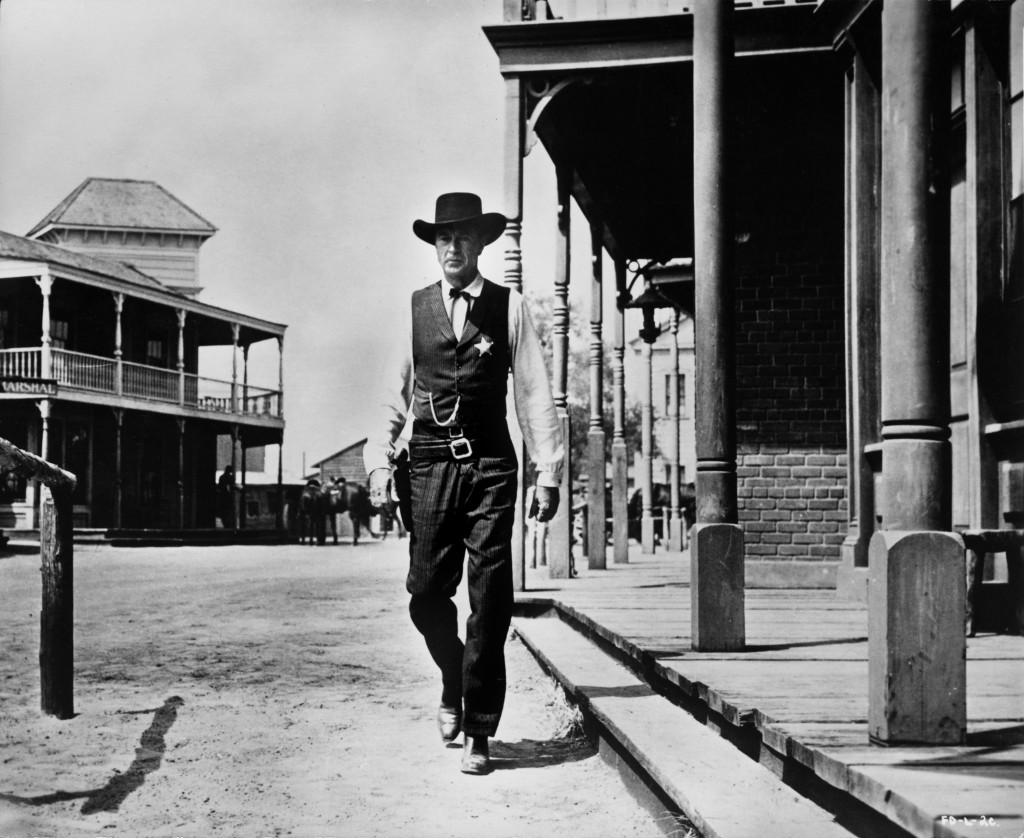
Will Kane (Gary Cooper) in High Noon ABC News

Will knows that it would be easier if he and his wife merely ran away from killer Frank Miller and his three henchmen, but Kane is emphatic, “They’re making me run,” he says. “I’ve never run from anybody before.” His bride saves the day and Tex Ritter provides a song now playing in my head, “Oh, don’t forsake me oh my darlin’….”

Scenes from High Noon and Oh Don’t Forsake Me Oh My Darlin’ at the end

Westerns shouldn’t be remembered just for their inaccuracies. Hollywood has reflected American culture at its best and its worse, against the backdrop of the politics and social issues of whatever time they are produced. I grew up during the Cold War and cowboys were a bit darker than Roy Rogers or Gene Autrey singing as they rode into the sunset. John Wayne in The Searchers and Alan Ladd in Shane are early examples. Clint Eastwood as the antihero “man with no name” in Sergio Leone’s spaghetti westerns. Westerns were uniquely American even when they moved to Italy.

Westerns have provided a vehicle to discuss thorny issues in American history too. Dancing with Wolves, Brokeback Mountain, Django Unchained, The Harder They Fall all made political or social statements.  

According to director Quentin Tarantino, “One of the things that’s interesting about westerns in particular is there’s no other genre that reflects the decade that they were made and the morals and the feelings of Americans during that decade [more] than westerns. Westerns are always a magnifying glass as far as that’s concerned.”

I wish our culture weren’t tied so tightly to guns and the fictitious “good guy with a gun”. I have to believe the Westerns my generation grew up with contributed to the mindset. You’re not manly enough if you aren’t willing to settle it man to man with your fists or a gun.

Gun culture is so uniquely American that it is estimated that Clint Eastwood killed almost four hundred victims to the cheers of his adoring fans. According to MovieBodyCounts.com that is good for fifth place on their top twenty-five behind Arnold Schwarzenegger. Don’t despair, Clint was tops in western movies, but John Wayne didn’t make the list. John was more selective about who he killed. Having an internet site devoted to body counts should tell us much about the culture we have created.
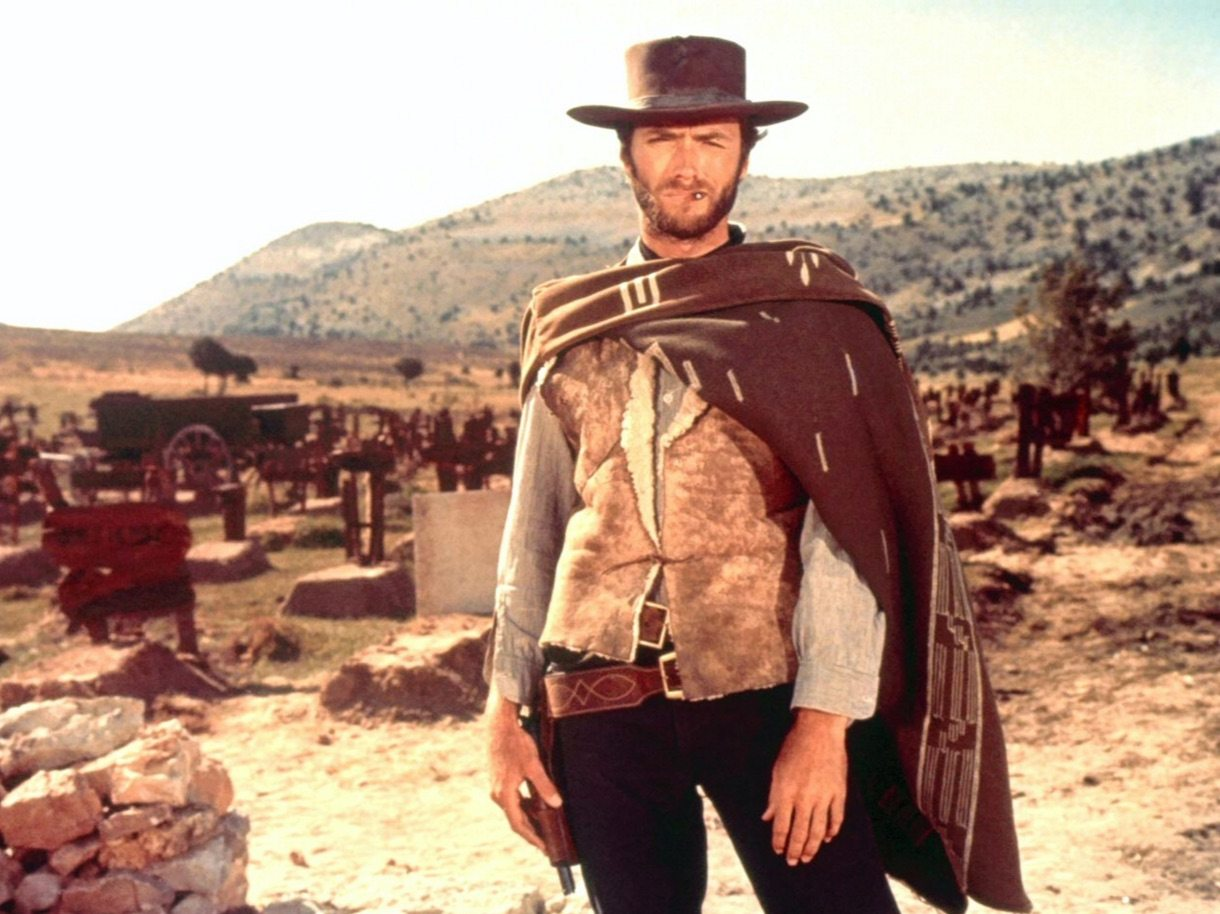
Clint Eastwood in a “Fistful of Dollars”

In the American West created by the likes of Max Brand, Zane Grey, or Buffalo Bill, the “good guy with the gun” always wins, kisses the girl…or his horse, and rides off into the sunset. I wish this were true in real life. In real life the good guy is usually out gunned and ends up dead.

***

Don Miller writes on various subjects and in both fiction and nonfiction. https://www.amazon.com/Don-Miller/e/B018IT38GM?fbclid=IwAR2uADIyymZJmWtp4LzVSDsEk6HTplFqkJAjPIfc3SKJGMLL0FFdP6ENR5o

Blog image of John Wayne and Natalie Wood in the movie The Searchers.

Intersecting Easter

“In the oddity or maybe the miracle of life, the roots of something new frequently lie in the decaying husks of something old.”
― Craig D. Lounsbrough

As I finished my walk with my best friend the conversation turned toward religion, as it often does. It continued while we drank our morning coffee at a local cafe. For some reason he thinks I’m more versed in this area than I really am. Less versed but our conversation got me thinking. Always an uncertain condition for me.

One of my thoughts was how the conservative, Evangelical Southern Baptist and the liberal, raised Methodist, and Dudeist continue to find common ground. Tis a shame some of our other brothers and sisters in faith can’t find the common ground. All it takes is a little work on both our parts. For clarification I am the liberal, he the conservative.

Later my thinking took me down a pig trail and the mental gymnastics I attempt to avoid. Coming to grips with my own beliefs…or lack thereof. A day of thinking turned into my own form of comedic relief. I realize it may only be funny to me.

April is a month in which the three major monotheistic religions and pagans celebrate important somethings and I found myself doing a bit of research. I am no longer as less versed as I was three mornings ago, but a little bit of knowledge can be dangerous.

Today, as I share this, is the Christian Easter, the most important celebration on the Christian calendar that proclaims Christ’s victory over death and the forgiveness of our sins as we are washed in the blood of Christ. As a child, being washed in the blood of Christ was a bit scary as were many of the stories told to me from the Bible. I still find myself more literal than I should be.

Besides celebrating the resurrection of Christ, we have expanded our celebration to include Easter hams, hot cross buns, new clothes, chocolate bunnies, dyed eggs, and rainbow-colored chicks along with Passion Plays, Easter Masses and Communions. There seems to be a tie in with the Christian Easter and ancient pagan spring festivals celebrating fertility and rebirth. (More on that later)

In accordance with Christ’s teachings, this connection to pagan festivals is perfectly fine with me. Resurrection is a form of rebirth and there are fertile fields of pseudo believers, nonbelievers, and those who have slid back waiting to be harvested. I know, for I am one.

Connected to Easter, Biblically and by the calendar, is the Jewish celebration of Passover, the exodus of the Israelites from slavery in Egypt, which occurs on the 15th day of the Hebrew month of Nisan, the first month of Aviv, or spring. To translate that into English for non-Jews, Passover is celebrated from April 15 through April 23. In Western Christianity, Easter Sunday must always follow the first full moon after the spring equinox which means Easter is celebrated near Passover. In the Eastern Orthodox Christianity, it is a bit more complicated because it involves a different calendar but sometimes, they even coincide.

During the time of The Passover, according to the Book of Exodus, God commands Moses to tell the Israelites to mark their homes with lamb’s or goat’s blood so that the Angel of Death will pass over them. This was the tenth plague placed upon Egypt for keeping the Israelites in bondage. The plague – the deaths of all first-born males except for those protected by the blood.

After the death of all firstborns, the Pharaoh orders the Israelites to leave, taking whatever, they want, and asks Moses to bless him in the name of the Lord. The Passover sacrifice of a lamb or goat recalls the time when the LORD “passed over the houses of the Israelites in Egypt”.

After ten plagues I understand why the Pharaoh might have been happy for the Israelites to leave but he backtracked some seven days later sending his chariots after them and setting up another miracle, The Parting of the Red Sea.

April is also the month of Ramadan for those who practice the religion of Islam. The Islamic holiday of Ramadan began on April 2 and lasts through the month of April. It’s centered around fasting, self-reflection, and prayer, and serves as one of the Five Pillars of Islam central to the religion.

During this month, Muslims can eat before sunrise – a meal called suhoor – and after sunset. The evening meal is called iftar. The month ends with a celebratory feasting holiday, Eid al-Fitr.

Unlike Easter and Passover, the origin of Ramadan is not surrounded by “blood”…that will come later. According to Muslim traditions, in a cave on a mountain, Muhammad was visited by the Angel Gabriel and was told he was a “Messenger” or “Prophet of God”. This was confirmed to Muhammad by a Christian relative Muhammad discussed it with.

Shortly after, Muhammad began to receive further revelations from Gabriel, as well as from the realizations of his own heart. According to hadith, the stories about Muhammad’s life, all holy scriptures were sent down during Ramadan, making these thirty days the holiest in the Muslim religion.

Along with the monotheistic religions I must shout out to my pagan friends too. I know I have one. They are involved in this intersection too and seem to be a fun group. Their calendar was based off the lunar cycles and equinoxes and solstices were important, none more so than the Spring Equinox. I know their lives were hard, but they certainly knew how to throw a celebration. Their Spring festival to the Goddess Oestara or Eostre or Biblically “Ishtar” being just one.

Their Spring celebration is the origin of the Easter Bunny and the Easter Egg except for the pagans it was the ‘moon hare’ that laid the ‘Cosmic Egg’ from which emerged all life. It is a short leap to chocolate bunnies and dyed eggs. The ‘hare of Eostre’ became the ‘Easter Bunny’ and the ‘Cosmic Egg’ became the Easter egg. It is thought that the word Easter morphed from Eostre.

A statue of The Cosmic Egg

Further, in pagan time special cakes were baked as sacrificial offerings to the moon goddess and were marked with an equal-armed cross to divide the cake into four quarters. These represented the four lunar quarters. The cake was then broken up into pieces and buried at the nearest crossroads as an offering. Again, we have a short leap to the ‘hot cross buns’…with a slab of Easter ham resting between two halves. That too is of pagan origins.

Biblically, Ishtar, both the mother and wife of Nimrod, a grandson of Noah, became pregnant and bore a son named Tammuz claiming he was the product of a sunray, which caused her to conceive. But Tammuz grew to be a hunter and was later killed by a wild pig. Ishtar, who claimed Nimrod had not died but became the god, Baal. She designated a forty-day period (the source of Lent?) to mark the anniversary of Tammuz’s death.

During this time, no meat was to be eaten. Every year, on the first Sunday after the first full moon after the spring equinox, a celebration was made. Ishtar also proclaimed that because a pig killed Tammuz, that a pig must be eaten on that Sunday, preferably in a hot cross bun. I added the bun part.

Enough research and intersection. I hope however you celebrate Easter it is a wonderful experience. I am going to have a ham biscuit.

***

A cousin of mine, Sara Howie Hammond, pointed out to me I was remiss in not including the Baha’i Faith, the newest of the world’s revelations, which is celebrating Ridvan which is a twelve-day celebration beginning on April 21. Bahá’u’lláh, the latest manifestation of God, came to unite the people of the world, to eliminate prejudice, and to bring an era of peace and justice to the world. The celebration starts at sundown on the 13 of Jalál, which corresponds to the 20 or 21 of April, depending on the March equinox date. The Ridván Festival is known as the “Most Great Festival” and the “King of Festivals” and it is the holiest festival in the Baha’i faith.

Thanks to Laura Dye for suggesting the site: Folklore, Customs, Legends and Mythology. It was helpful and the basis of my research on pagan celebrations. I might have even copied a bit.

Google supplied the Bunny Rabbit image although it looks just like the semi-tame bunny who lives in my back yard.

Don Miller’s latest release is a nonfiction group of stories and essays named “Pig Trails and Rabbit Holes, More Musings From a Mad Southerner.” The book may be purchased in paperback or downloaded at https://www.amazon.com/Pig-Trails-Rabbit-Holes-Southerner/dp/B09GQSNYL2/ref=tmm_pap_swatch_0?_encoding=UTF8&qid=&sr=

A Titch’s Wit

I am contemplating my stupidity. According to the weather liars it’s twenty-seven with a wind chill making it feel like nineteen. I know. You northerners are cranking up the grill and getting the beer put on ice. Here in the foothills of the Blue Ridge, we might be headed toward a modern ice age. I could be in Florida where the cold snap is expected to cause cold-stunned iguanas to fall from trees.

Fear not. It will wake up when it warms up.

Why am I contemplating my stupidity? It is walking day with my best friend, Hawk. Normally we walk on Fridays but scheduling problems and Covid reared their heads, so this is the first walk in three weeks, and it is on a cold and windy Saturday morning.

Two seventy-one-year-olds braving the elements, to set in their ways to ask, “Do you think we ought to just go to the coffee house have a cup of coffee?” Noooo. We are much too manly to do something smart. Neither one of us wants to admit we would rather be sitting in the warmth sipping a dark roast.

Southerners don’t do cold.  Add snow or ice and we are damn near suicidal. It became apparent that Southerners don’t do cold when I looked up “Southern Sayings About the Weather.” For every Southern saying about the cold, there were dozens of heat and humidity sayings and right now you can guess which one I would prefer to be using.

As cold as a well-digger’s butt in January” is about descriptive as we get. That one along with “Cold enough to freeze the balls off a brass monkey”, and “as cold as a witch’s tit in a brass bra” are not even Southern. We plagiarized them from our Northern neighbors or some of our English forefathers and foremothers.

Per normal, this sent me down one of my many rabbit holes. Where did such sayings come from?

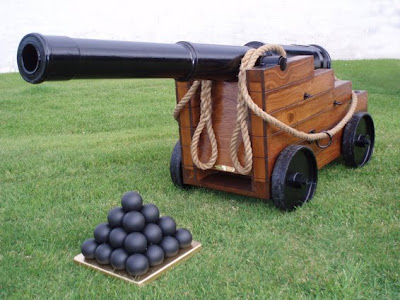
While freezing the balls off a brass monkey seems to be a physical impossibility, what if I told you that a brass monkey might not be what you are thinking it might be. As one story goes, cannonballs on English ships used to be stored aboard ship in piles, on a brass frame or tray called a ‘monkey’. In very cold weather the brass would contract, spilling the cannonballs: hence very cold weather is “cold enough to freeze the balls off a brass monkey”.

Cannon balls sitting in a Brass Monkey with a cannon from a British sailing ship.

Notice I said one story, a story that probably isn’t true. According to www.lexico.com, the term ‘monkey’ is not recorded as the name for such an object. “The facts, ma’am, just the facts.” The rate of contraction of brass in cold temperatures is unlikely to be fast enough to cause the reputed effect and the phrase was first recorded as “freeze the tail off a brass monkey” which removes any essential connection with balls, brass or otherwise. Why let facts get in the way of a delightful story?

It seems that the phrase, “cold enough to freeze the balls off of a brass monkey” is simply a humorous reference to the fact that metal figures will become very cold to the touch in cold weather. Descriptive but boring.

Can you tell which one is cold?

So, what about a witch’s mammary glands encased in a brassiere made from an alloy of copper and zinc? One might think Salem Witch Trials or some old English saying but it is not…at least not in print and the saying is not ‘that’ old. It may have been used earlier but first appeared in print when American historian and writer Francis Van Wyck Mason wrote Spider House in 1932. The exact quote was “As cold as a witch’s tit outside.” The addition of the brass bra probably connects to the brass monkey’s testicles in some way.

Actually, a Bronze Age Goddess Bra, not brass. Probably worn in a Russ Meyer sexploitation film although the bra might not be large enough for one of Russ’ heroines.

Interesting fact from the 1700s, the prime time for witch trials. Women with erect nipples were considered to be in league with the devil. This explains an interesting correlation between an increase in witch trials and cold weather…and why a brass bra might have been utilized for protection had brassieres been invented.

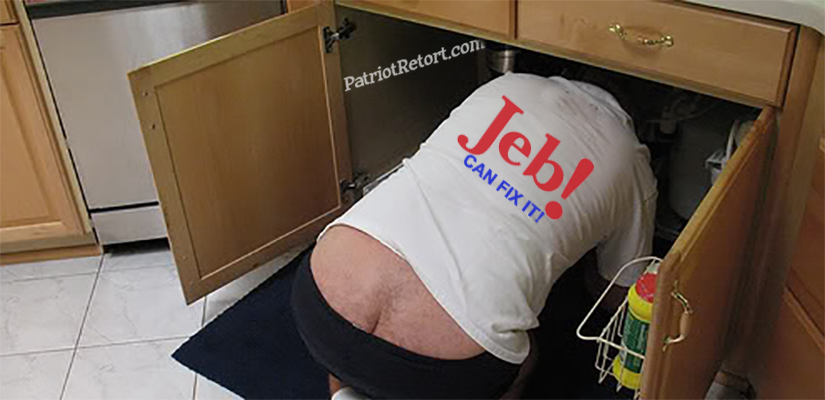
That leaves us with “as cold as a well digger’s butt in January.” Do I really need to explain this? If you have ever watched a chubby plumber at work, you have an idea of its origin although plumbers aren’t well diggers.

I’m sure Jeb is a good plumber

There is no scientific reason for a well digger’s rump to be colder than say an ice skaters. “As cold as an ice skater’s butt” is more mentally pleasing than the crack of Ole Jeb’s butt peeking out of his wrangler jeans while he works on my grease trap.

We survived our walk and the rabbit hole fell into. The walk wasn’t bad until the wind blew. Well, it snowed on us. Maybe ten flakes in a minute. We also found we weren’t the only fools out and about. I really enjoyed certain runners in their lycra body suits although I’m sure several could have been put on trial in 1700s Salem for witchcraft. 

For more go to Don Miller’s author’s page at https://www.amazon.com/Don-Miller/e/B018IT38GM?fbclid=IwAR1ThWNJrpUfzoiZb_aT5DzaIQX1-DDiSJiDHVXAzn0ttDYNhLs3VW5w6SY