Black History…American History….

“Black history is indeed American history, but it is also world history.”
― Angela Y. Davis, Freedom Is a Constant Struggle

In the early days of the Obama years, I first got the dreaded “When are you going to teach white history?” question as soon as Black History Month began, and I discussed what I might be teaching.  We are in the second year of the second administration and the same people are making the same asinine statements or asking the same asinine questions. 

I will be disgusted because many asinine statements will come from former students, teaching peers, and friends I want to respect but find that I can’t.  We can agree to disagree but not on racism, covert or overt. White is the default, a preselected option. When it is not, we can move on from Black History Month.

I question the motives of folk who comment negatively about Black History Month and wonder if the ghost of George Wallace or Strom Thurmond haunts them. I have seen social memes and comments that have included “When is White America going to have a Month?” “Black History Month is Racist!” “Why do we have to have a Black History Month?”

An answer to the last question, in a perfect world, YOU WOULDN’T have Black History Month. Nor would you have Women’s History Month, in March, a Native American Heritage Month, in November, a Hispanic Heritage Month beginning in the middle September or any of the others that you can take the time to look up. Unfortunately, we are not, nor have we been, living in a perfect world. To quote a former student, “We celebrate white history in all months that don’t begin with F.” I agree with my student and believe any child should be made to feel included.

Examples of it not being a perfect world include protest, verbal and physical, over CRT, kneeling football players, Black Lives Matter, Antifa, and The 1619 Project, a book I am presently reading. Parents are outraged over naked mice in Maus and language that they themselves use when yelling down school board members. Examples of an imperfect world date to when “We hold these to be self-evident, all men are created equal” was written. Our Declaration of Independence and Constitution were both an ideal and a lie and evidence of an imperfect world when they were first penned.

As a retired, high school history teacher I know history books are written from a decidedly European-American point of view…well…at least where I taught, a deeply red, conservative state. A state that almost required D. W. Griffith’s “Birth of a Nation” as required viewing, along with Margaret Mitchell’s “Gone With The Wind” and Walter Raleigh’s “Ivanhoe” as required reading. I find little has changed in the time since I retired as it relates to most non-European-American history.

During a year, Asian-Americans are mentioned a few times.  Transcontinental Railroad, the Chinese Exclusion Act and Gentleman’s Agreement, the Japanese involvement in World War Two and China goes communist, Korea and Vietnam.

Hispanic contributions, a bit more. Spanish colonization, the Mexican-American War, Imperialism, Pancho Villa, and then a jump to NAFTA and the question “Why are they taking our jobs?” Wait, we fixed that one, didn’t we? Since I’ve retired, I’m sure illegal immigration is a topic. Notice, these are all mostly decidedly negative when viewed from a white European point of view and not a celebration at all.

Native Americans are prominent but disappear after Wounded Knee unless you happen to bring them back up in the Sixties with the many social movements. Again, until recently, Custer’s Last Stand was viewed as a glorious massacre, brave men falling to war painted heathens. Damn Redskins stepping on our Manifest Destiny and the only good Indian…! I digress.  The Washington Football Team, formally Redskins and now Commanders, cured all those ills. (Said with sarcasm)

I rarely taught Black history exclusively during Black History Month. I was wrong. I deluded myself into thinking that I taught EVERYONE’S HISTORY ALL YEAR LONG and didn’t need to focus on a Black History Month. It wasn’t until late in my career that I began to assess what I had taught. I’m not happy.

Denmark Vesey, Nat Turner, Harriett Tubman, Fredrick Douglass, W.E.B Dubois versus Booker T. Washington, Rosa Parks, Dr. Martin Luther King and maybe Malcomb X. There were others but most were only related to certain peculiar aspects of African American lives and American history. A decidedly important aspect but besides George Washington Carver and Langston Hughes, there was nothing about other contributions.

Why didn’t I teach other aspects of Black culture and history? Because I hadn’t been taught Black culture and history. During my college days, Black culture and history were after thoughts…not even after thoughts. I grew up in a segregated society that had just begun to transition as I entered college. I did run across an African Studies course as I finished my specialist’s degree thirty years later, but I did not enroll.

Black History Month should be viewed as an opportunity to spotlight contributions by African Americans. It should focus on the less obvious, not just slavery, Jim Crow, and Civil Rights.

Musicians, artists, writers, poets, inventors, explorers, scientists, businesspeople, soldiers, etc. should be spotlighted. It should be an opportunity for us all to learn. As I have learned, Black History is American History and a rich, patriotic history at that.

Three years before my second retirement were teaching “cultural” geography. I loved it. One, I had no end of school testing pressure and could go off on any tangent I desired to go off on. I could be creative and allow creativity from my students. It became about cultural diversity, really teaching everyone’s history and culture, all year long. I would like to think my best efforts as a teacher came during those three years.

A paragraph I wrote in one of my many musings sums up my feelings, “Today I look toward diversity as a smorgasbord of delights. I believe we should just focus on how diversely different people party. How can you be distrustful of people who produce such wonderful food? Or music, or art, or etc….. My life without Latin, Soul, Asian, and Cajun foods would not be life-ending, but life would not be as joyous, especially without a Belgian, Mexican, Jamaican, or German beer, a Mojito, or some Tennessee whiskey to go with it and a Cuban cigar for afterward. We should play some Blues, Reggae, Blue Grass, or a little Zydeco to help the atmosphere along. It is just as easy to focus on the positives about diversity as it is the negatives and again with knowledge comes understanding.”

I am a social liberal swimming in a red sea of conservatism and make no excuses for my beliefs. I don’t believe books should be banned or that CRT is being forced down our children’s throats by liberal teachers who hate America.

I believe that the rights that someone else is given do not take my rights away from me including the right to celebrate Black History Month…or Cinco De Mayo or St. Patrick’s Day for that matter. In fact, I have joined in and by doing so believe I am not only a better American but a better human.

I know my quote by Angela Y. Davis will rankle some folk. Yes, she is a Communist and yes, she was arrested for the crime of murder…and acquitted by an all-white jury I might add. She is also a lesbian and a liberal university professor. Many will discount anything I said because I used her quote. In this case it is about the message not the messenger. Black history is world history.

Don Miller’s Author’s Page may be found at https://www.amazon.com/Don-Miller/e/B018IT38GM?fbclid=IwAR0mzivK_bmnTjG4D9RL1KGMQ4TurZ8y7hrFca8ExoRa_XmkEUStmSylMCc

A Titch’s Wit

I am contemplating my stupidity. According to the weather liars it’s twenty-seven with a wind chill making it feel like nineteen. I know. You northerners are cranking up the grill and getting the beer put on ice. Here in the foothills of the Blue Ridge, we might be headed toward a modern ice age. I could be in Florida where the cold snap is expected to cause cold-stunned iguanas to fall from trees.

Fear not. It will wake up when it warms up.

Why am I contemplating my stupidity? It is walking day with my best friend, Hawk. Normally we walk on Fridays but scheduling problems and Covid reared their heads, so this is the first walk in three weeks, and it is on a cold and windy Saturday morning.

Two seventy-one-year-olds braving the elements, to set in their ways to ask, “Do you think we ought to just go to the coffee house have a cup of coffee?” Noooo. We are much too manly to do something smart. Neither one of us wants to admit we would rather be sitting in the warmth sipping a dark roast.

Southerners don’t do cold.  Add snow or ice and we are damn near suicidal. It became apparent that Southerners don’t do cold when I looked up “Southern Sayings About the Weather.” For every Southern saying about the cold, there were dozens of heat and humidity sayings and right now you can guess which one I would prefer to be using.

As cold as a well-digger’s butt in January” is about descriptive as we get. That one along with “Cold enough to freeze the balls off a brass monkey”, and “as cold as a witch’s tit in a brass bra” are not even Southern. We plagiarized them from our Northern neighbors or some of our English forefathers and foremothers.

Per normal, this sent me down one of my many rabbit holes. Where did such sayings come from?

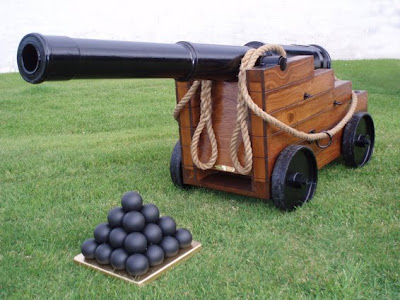
While freezing the balls off a brass monkey seems to be a physical impossibility, what if I told you that a brass monkey might not be what you are thinking it might be. As one story goes, cannonballs on English ships used to be stored aboard ship in piles, on a brass frame or tray called a ‘monkey’. In very cold weather the brass would contract, spilling the cannonballs: hence very cold weather is “cold enough to freeze the balls off a brass monkey”.

Cannon balls sitting in a Brass Monkey with a cannon from a British sailing ship.

Notice I said one story, a story that probably isn’t true. According to www.lexico.com, the term ‘monkey’ is not recorded as the name for such an object. “The facts, ma’am, just the facts.” The rate of contraction of brass in cold temperatures is unlikely to be fast enough to cause the reputed effect and the phrase was first recorded as “freeze the tail off a brass monkey” which removes any essential connection with balls, brass or otherwise. Why let facts get in the way of a delightful story?

It seems that the phrase, “cold enough to freeze the balls off of a brass monkey” is simply a humorous reference to the fact that metal figures will become very cold to the touch in cold weather. Descriptive but boring.

Can you tell which one is cold?

So, what about a witch’s mammary glands encased in a brassiere made from an alloy of copper and zinc? One might think Salem Witch Trials or some old English saying but it is not…at least not in print and the saying is not ‘that’ old. It may have been used earlier but first appeared in print when American historian and writer Francis Van Wyck Mason wrote Spider House in 1932. The exact quote was “As cold as a witch’s tit outside.” The addition of the brass bra probably connects to the brass monkey’s testicles in some way.

Actually, a Bronze Age Goddess Bra, not brass. Probably worn in a Russ Meyer sexploitation film although the bra might not be large enough for one of Russ’ heroines.

Interesting fact from the 1700s, the prime time for witch trials. Women with erect nipples were considered to be in league with the devil. This explains an interesting correlation between an increase in witch trials and cold weather…and why a brass bra might have been utilized for protection had brassieres been invented.

That leaves us with “as cold as a well digger’s butt in January.” Do I really need to explain this? If you have ever watched a chubby plumber at work, you have an idea of its origin although plumbers aren’t well diggers.

I’m sure Jeb is a good plumber

There is no scientific reason for a well digger’s rump to be colder than say an ice skaters. “As cold as an ice skater’s butt” is more mentally pleasing than the crack of Ole Jeb’s butt peeking out of his wrangler jeans while he works on my grease trap.

We survived our walk and the rabbit hole fell into. The walk wasn’t bad until the wind blew. Well, it snowed on us. Maybe ten flakes in a minute. We also found we weren’t the only fools out and about. I really enjoyed certain runners in their lycra body suits although I’m sure several could have been put on trial in 1700s Salem for witchcraft. 

For more go to Don Miller’s author’s page at https://www.amazon.com/Don-Miller/e/B018IT38GM?fbclid=IwAR1ThWNJrpUfzoiZb_aT5DzaIQX1-DDiSJiDHVXAzn0ttDYNhLs3VW5w6SY

The Wishbook

…the Sears catalog, “serves as a mirror of our times, recording for future historians today’s desires, habits, customs, and mode of living.” The 1943 Sears News Graphic

Someone shared a memory and I fell into a rabbit hole. Later, I was looking at Amazon offerings on Cyber-Monday when the memory arrived-The Sears Wishbook.

When I poured over the offerings from the Sears Catalog, I never thought of it as a historical source. I was a child and perused it as most children did, wishing.  Wishing I had the gazillion piece “Fort Apache” set, the Lionel train set, a JC Higgins’ 100 Bicycle, the shotgun being hawked by Ted Williams, just to name a few. Somewhere along my pathway, I did own a Lionel train set, a hand-me-down from an older cousin, and a JC Higgins double barrel. Wish I knew what happened to them.

The arrival of the Sears Christmas “Wishbook” was a highly anticipated event. Not just by children. I remember my mother’s excitement and I had to wait in line for the opportunity to leaf through its five hundred or so pages.

The 1961 Wishbook cover I probably “wished” over.

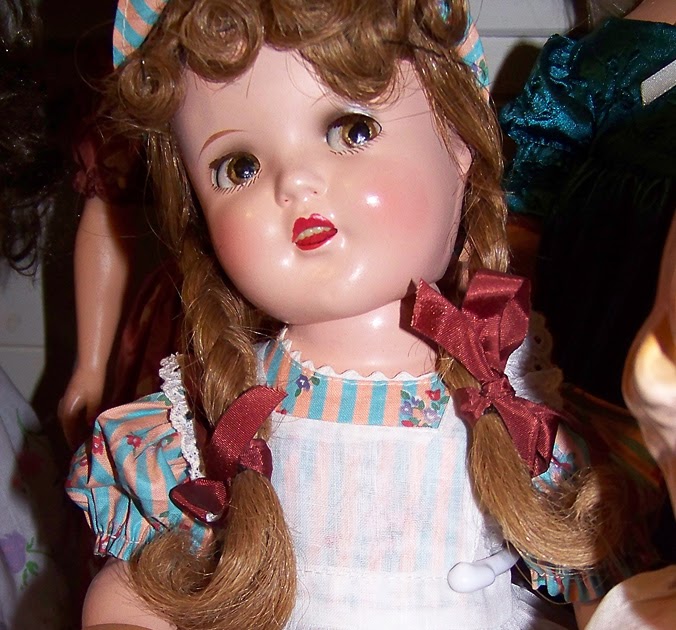
The first Wishbook dropped from the presses in 1933 and according to History.com “Items featured in the first catalogue included the popular Miss Pigtails doll, Lionel electric train sets, a Mickey Mouse watch, boxes of chocolate and even live singing canaries.” It had not changed much in the Fifties and Sixties, but I don’t remember singing canaries.

Miss Pigtails…I think.

The catalogue would arrive in our mailboxes in late August or early September and soon became as much a holiday tradition as “chestnuts roasting on an open fire” with warm, colorful Christmas scenes decorating the cover and the pages within. Thank you, RFD1 for the hours I flipped through the pages, defining, and refining my Christmas choices.

The Sears Catalog was a boom for those of us who lived in rural and isolated areas. It was a boom for R. W. Sears, a railroad agent who bought a shipment of watches to sell as a side business. He was later joined by Alvah C. Roebuck, a watchmaker, and in 1893 Sears and Roebuck Mail Order Company was born. The business quickly expanded to selling more than watches and the first Sears Mail Order Catalogue was mailed out in the late 1890s.

The Sears and Roebuck mail order business quickly took off. The Sears catalogue contained hundreds of pages of merchandise by the late 1890s. Rural Americans, two-thirds of the population at that time, could now purchase hundreds of different items—shoes, women’s garments, including unmentionables, horse drawn wagons, and for a time horseless carriages, fishing tackle, furniture, china plate sets, musical instruments, firearms, and bicycles—all by mail.

See the source image
The Sears Motor Buggy had a top speed of twenty-five mph. It was sold from 1908-1912 but became a casualty of Henry Ford’s Model T

You could order anything from a Sears Catalog. Anything would include a kit home called the Sears cottage. Between 1908 and 1940, seventy-five thousand kit homes were sold.  They were well designed, well made, and economical. Many of those homes still exist today.

How much did a Sears kit house cost? Comprising more than 10,000 pieces and materials, the kits retailed for between $600 and $6,000 and were available in over two-hundred styles. That would be about $10,000 to $100,000 in today’s money. Need financing, Sears did that too.

See the source image
One of the more expensive homes.

Need furniture, appliances, and tools to finish the project? Sears had it all. Window dressings, stoves to cook on, dining rooms to eat in, Sears was your “one stop” for all your shopping needs and with “quality” too.

With the population moving to the cities, Sears built its first brick and mortar store in 1925. Located by design in working-class areas, Sears was one of the first department stores to cater to working men. Durability over fashion, quality tools, and hardware were mainstays.

Not that women were ignored. “Fashionable” clothing, “exotic” perfumes, kitchen appliances, vacuum cleaners, and sewing machines for those who wanted to sew their own and look fashionable doing it. Key up a mental vision of June Cleaver cleaning house in a dress featuring Peter Pan collars, bouffant petticoats, and high heels.

See the source image
The first Sears store. Chicago 1925

Sears was responsible for industry firsts. Kenmore sewing machines appeared in 1913 and expanded over the years to include vacuum cleaners, refrigerators, and air conditioners, followed by other quality appliances. Sears sold its first Craftsman tools in 1927 expanding to include power tools, lawn mowers, and garden tractors. At the time these were quality tools that carried lifetime guarantees.

All-State Insurance was a Sears creation as was the Discovery Card. Within a decade over twenty million Americans had a Discovery Card.

I’ve drifted away from the Sears Catalogue and into a history lesson.

The Sears Catalogue and The Wishbook don’t exist any longer with its glossy pages of colorful pictures. In the early Nineties it became a casualty of the internet age and big box stores. As the country roads of my youth became a casualty of the interstate systems and urban sprawl, The Wishbook ceased to exist anywhere but online and in my mind.

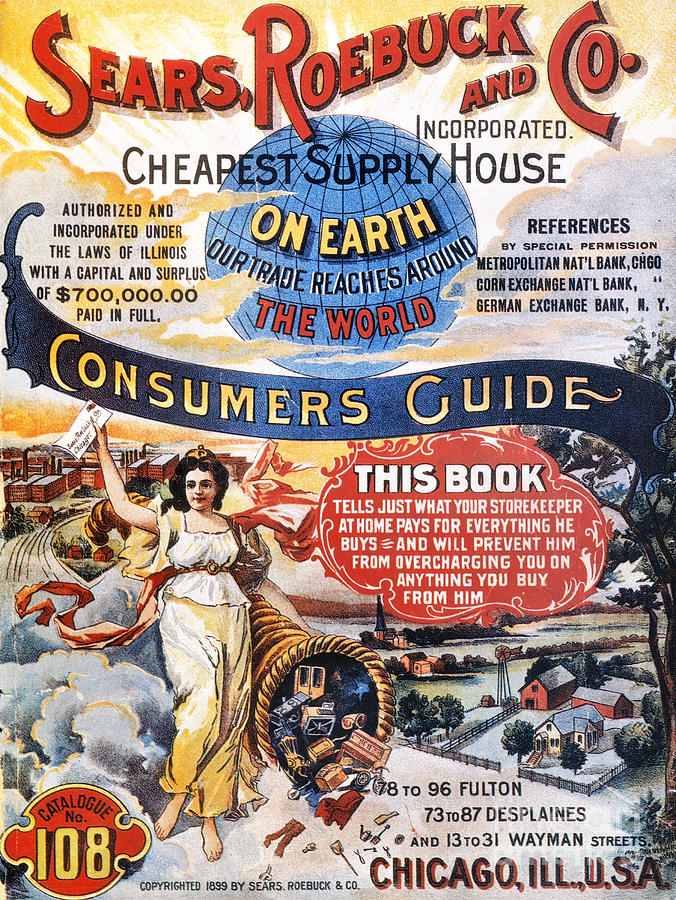
See the source image
1899 Sears Catalogue Cover

Sears, itself, became a casualty of its own making. Others emulated it and did it better. Big box stores like Walmart and K Mart sold more for less…and with less quality. Sears followed suit but couldn’t keep up, closing many stores and laying off its workers.

Sears sold itself to K Mart, Kenmore to Amazon, and Craftsman to Stanley Black and Decker. Finally, it filed for bankruptcy in late 2018. One more icon of the past gone…at least, in its original form.2

According to author Christine Brae, “Time waits for no one” but the little boy in me still remembers the glorious day when the Sears Wishbook arrived. I can close my eyes and see the Christmas scenes with gayly clad boys and girls. I can see the toys I could only dream about and remember some that found their way under the Christmas tree to be opened on Christmas morning.

The Wishbook harkens to those days in my life when my biggest worry was if “I had been a good little boy.” Christmas carols, Mother’s Ambrosia, Nannie’s quilted stockings filled with fruit, nuts, and butter mints. My father’s bloody knuckles from grating coconut for coconut cake. Christmas was about family gatherings on Christmas Eve.

Early on Christmas morning, whispering to my little brother as we waited in anxious anticipation for our parents to wake up and take us to see what was under the tree. Hoping there was no bag of coal or bundle of switches. Peeking around the corner attempting to see what might be there before scurrying back to bed when we heard our parents’ bedroom door open.

It is about The Wishbook and the warm memories it triggered.

***

 RFD1
Rural Free Delivery (RFD) was a program of the United States Postal Service that began in the late 19th century to deliver mail directly to rural destinations. Until the late 19th century, residents of rural areas had to travel to a post office to pick up their mail or to pay for delivery by a private carrier. RFD post service allowed the distribution of national newspapers and magazines and was responsible for millions of dollars of sales in merchandise to customers through mail-order deliveries in rural areas.

2 Sears is in its final days. There are approximately twenty-three Sears stores still open in the United States, as of November 11, 2021. Of these, six are set to permanently close soon. There is still a Sears presence online that sells familiar Sears products like Kenmore appliances or Craftsman tools.

My author’s page is found at https://www.amazon.com/Don-Miller/e/B018IT38GM?fbclid=IwAR3IdxEjFJbXm_hKGSr97HEFWc02TNzkZReQYi33Ls4gox_V5KOabXN-Yvg

My Southern Heritage Doesn’t Require a Flag

…or a monument.

Summer is upon me.  According to John Phillips, “The Mississippi River runs like molasses in the summertime.”  I know the summer humidity is as sticky as molasses…just like discussions about my heritage. 

The steamy humidity is a part of my heritage, as are lightning bugs and mosquitos, or violent thunderstorms, and the refreshing cool afterward.  Cutting sweet corn off the cob and salting it with the sweat off my brow.  Seems much of my heritage runs the gamut between opposite poles of good and bad.

My Southern heritage is being debated across the far reaches of this country…again.   The left is celebrating a statue of General Lee and Traveler, along with Stonewall Jackson being whisked off to a museum and the Right continues to debate the evils of Critical Race Theory, a theory I believe most have never studied…including me.  CRT is a graduate school or law school course that has been around for some forty years and is beyond the scope of what is being taught in grade schools.  Some people are confusing the truth about our checkered past for CRT.  I notice the folks crying the loudest about General Lee are also crying the loudest against CRT.  Maybe they aren’t confused at all.

These statues were erected to glorify men so gallantly in their Confederate gray or butternut.  Many monuments were bought and paid for by the Daughters of the Confederacy.  Statues bought and paid for by our grandmothers and great grandmothers can’t be bad, can they? 

The problem is many were erected in the badly segregated South of the Jim Crow era, celebrating men who caused the deaths of so many and who brought havoc and destruction to the South.  Erected by those who advanced a segregated society for another hundred years after the war. I find nothing to celebrate on this issue.

I believe there is much to celebrate about my Southern heritage. What I celebrate doesn’t increase the resentment associated with enslaved people bullied and beaten by gun bulls and patty rollers on tall horses.  The enslaved whose present and futures were lorded over by Southern aristocrats whose propaganda led poor whites to their deaths on distant hillsides.  Our heritage doesn’t have to involve a Battle Flag that flew over an army in the employ of a rebellious cluster of Southern states intent on keeping and expanding their “peculiar institution.” A “country” that only lasted for four years.

Is there nothing else we can celebrate regarding Southern Heritage?  Is there nothing else to be proud of?  Is there nothing more than flags flown from pickup trucks and belt buckles and bumper stickers proclaiming “Forget, Hell!!!!”  Are we simply the sum of our rebellious past?

We have a rich culture that doesn’t have to harken back to “old times there are not forgotten.” If you are going to lionize the exploits of soldiers on a battlefield, why look past the Revolutionary War?  More Revolutionary War battles were fought in my state than any other and some of the greatest military leaders of the war fought here.  South Carolina born and bred, Sumter, Marion, Pickens, and Moultrie, along with adopted sons like Morgan, Greene, and Shelby left their mark, not only on my state but on the nation as a whole.

Wait just a “cotton pickin’ minute.”  Weren’t some of these men slave owners? Yes, some were and despite this fact, we should neither purge them from history books nor should we discount their contributions.  As some of my right-leaning friends have told me, “It’s history”.  I agree, it is history and history should be taught warts and all.  It shouldn’t be sanitized, nor should it be taught as propaganda like my eighth-grade Cold War Civics class. History is simply what was. We shouldn’t cover it up and we shouldn’t hide from it.

We have a rich Southern culture and heritage going back centuries despite our “peculiar institution” and resulting Jim Crow…let me rephrase that…” including our peculiar institution and resulting Jim Crow.” It’s history.  We don’t need a flag or statues to worship under any more than we should deny the existence of mosquitoes and high humidity in our travel brochures.  They are facts we can’t or should not attempt to escape.  Facts are facts and history is history.

We have a rich and diverse heritage in my state alone.  Gullah language and art from the coast to Appalachian culture in the mountains and foothills and to German Lutherans in the “Dutch Fork” middle.  Native American tribal influences from the Catawba River, across to the Savannah, and down to Pee Dee just to mention a few.  We have art, music, and literature that sprang from slaves and sharecroppers. Beautiful cities and small towns.   Architecture, music, visual arts, cuisine, sports, a heritage that shouldn’t include praise for men enslaving other men or men who fought for them. 

When I say “shouldn’t include” do I mean we should ignore it?  Certainly not.  We shouldn’t heap praise upon the heads of my long-ago, dearly departed great, great grandfathers for fighting under the Battle Flag of Northern Virginia.  Whatever their motivation, they rebelled in the name of supporting slavery. If there was any honor in that flag it was lost when it was co-opted by the KKK and like minded white supremacists while we or our parents did nothing.

My grandfathers were poor men with little education.  Maybe they bought the propaganda about the state’s rights that included the right to enslave.  Maybe they believed in an unfair tariff that was placed on goods raised on the backs of the enslaved.  Maybe they believed it was a War of Northern Aggression.  I doubt they thought much past the surface.  Wars are started by rich, old men and fought by young, poor ones.  Still, they fought and died under the wrong banner and should not be memorialized or immortalized. 

No, I’ll stick with being proud of a heritage that includes BB King from Mississippi singing the Blues, a Southern invention.  I might sip a bit of Jack Daniels from Tennessee with a bit of Coca-Cola invented in Atlanta, Georgia.  Maybe later I’ll select from a menu that includes Cajun or Creole food from Louisiana or BBQ from anywhere in the South or shrimp and grits, from my state.  I’ve eaten enough Soul food to cause my arteries to collapse.

Afterward, I might go sit on my front porch, a Southern culture trait in itself, while smelling honeysuckle, jasmine, or gardenia with a Pat Conroy, Ace Atkins, or a James Lee Burke novel.  All notable Southern authors who follow a lineage of fine Southern authors from Faulkner, Walker, O’Conner, and Williams to name just a few.

Depending on the season I might watch my favorite sports teams, The Braves from Atlanta, The Tigers from Clemson.  I might catch a NASCAR event, a sport begun in the South that sprang from moonshiners and dirt track racers.  We have a Southern heritage attached to our sports teams and college football is a recognized religion with an attending congregation in the millions on any given Saturday.  Why can’t we Southerners be proud of that?

Again, and with fervor, my Southern Heritage doesn’t involve a battle flag or statues saluting dead Confederates.  My Southern Heritage is too rich for that.   My Southern heritage is about beautiful and historic homes and cities, sharecropper shanties, and Sears cottages. It’s about kudzu, cotton, and long-abandoned textile mills.  It’s about old men, white and black, plowing behind a mule on the river bottoms.

It is about rich music from Nashville or Muscle Shoals and even richer food from New Orleans, Atlanta, or anywhere on the coast. It’s great literature that can be as heavy as Southern humidity or as light as the scent of Jasmine.  My Southern heritage is about beautiful flower and vegetable gardens, and cotton fields bursting white in the fall.  It is about sitting on the front porch with family and friends after church and a Sunday dinner. 

My heritage is about friends and families of all races.  It is about celebrating diversity.

If I haven’t turned you off, further works by Don Miller may be found at https://www.amazon.com/Don-Miller/e/B018IT38GM?fbclid=IwAR0A3XCeFAUGkHotYyrBgt6V-v3Rl-6mVzt2hmVK3o_4rtITkiH874sjYQs

Image of Lee’s statue by Paul Mayer, Office of the Mayor, Washington, DC.

Stories I Need to Tell My Grandchildren

“Stories have to be told or they die, and when they die, we can’t remember who we are or why we’re here.”
― Sue Monk Kidd, The Secret Life of Bees

An Introduction

The time and place of my birth and early life seems alien today…the middle of the Twentieth Century in a Southern, rural, farming community. There is little resemblance of my childhood world to the modern one. A Baby Boomer, I might have grown up in a foreign country…or another planet. I did grow up in a different century. It is certainly not your world, my grandchildren, my loves.

I feel the need to tell stories. Hopefully you will recognize the language, hopefully you will learn that your roots run deep.

The hands of the clock moved slower then…there had to be more than twenty-four hours in the day.  Not because we were bored but because it seemed we did so much in the time that we had. Days so rich and so filled, there had to be more minutes in the day than the 1440 we have now. 

In the time of my youth, cotton was still king with cotton gins and textile mills running at full capacity.  Pulp wooders were still stripping the hills of pine trees to feed the hungry paper mill just across the river from my home.  John Deere tractors pulled disc harrows or hay bailers toward the river bottoms. There were more cows than people, when “backyards” included vast pastures and mixed forests. There were no traffic lights and few stop signs.

Dark-skinned truck drivers were still carrying huge loads of red clay past our house to Ashe Brick Company in distant Van Wyck.  Distant…which was just down the road a piece but might as well have been on a different continent.

Little white boys with crew cuts and flattops standing out in their yard giving the black truckers a universal sign of pumping fists they smilingly returned by blasting us with their air horns.  They seemed to never tire of it, I know we didn’t.  Huge grins blindingly white against dark complexions.

My little brother playing in a sandy ditch using his voice to mock the trucks as they shifted through their gears, pushing his Tonka Toy Truck as he did.  My parents worried he would destroy his vocal cords if he didn’t quit. I might have wished that he had…but just a time or two.

Sitting under a huge pecan tree on a hill above a two-lane blacktop, watching the sparse traffic and being able to recognize the cars of friends, family, and acquaintances, some by their distant sound.  There was always a stir when a new model cruised by. Knowing who the occupants were just by the cars they drove. Everyone waved and smiled.  It truly was a different era.

It was a different time because my family was still intact, and the place of my youth still existed.  Family and place are important. Two hilltops and two ‘hollers’ filled with extended families.  Grandparents and Great Grandparents, uncles, and aunts, all making sure we always toed the line. The old Nigerian proverb ‘Oran a azu nwa’, “it takes a community or village to raise a child,” certainly was true.  

Cousins to play with even though I was between generations.  Younger than one generation and older than another, I sat dead in the middle, alone. It didn’t matter.  My closest friends of the same age were just across the road or just up the road apiece, all within walking distance.  I am amazed at how long an hour of playtime was during those days.

Forays through our mixed forest into the piney woods across the “crick “ to the Morris’ home or across the road, walking past the scary kudzu shrouded ravine to the Jackson’s.  An active imagination wondered what might be lurking there. What animal or monster, or if the kudzu might reach out and kidnap me. An unofficial club house in a privet shrouded sharecropper’s home that sat abandoned next to my house.

If we had a penny we might trek to Pettus’ or Yarbrough’s store for a small Sugar Daddy or BB Bat. “You be careful crossing that road, now, Stop, look, and listen.” Traffic was sparse but our parents still worried.

There were few families in my little world I wasn’t related to.   If the last name was Griffin, Pettus, Perry, Rodgers or Wilson, our family trees probably merged at some point…sometimes becoming quite tangled or maybe without limbs at all. An aunt on one side of the family was also an aunt on the other side of the family, and also my third-grade teacher. I need to ask questions because I don’t exactly remember how that came to be. The last name, Miller, was a rare one but then my dad was a transplant from Fort Mill, thirteen miles away.

Playing football or baseball in the stubble of harvested hay, or corn, or cotton in the field across the road.  At least we didn’t have to worry about avoiding cow patties, but we never learned to hook or popup slide, either. 

Corn cob fights around the corn crib and barn where we did worry about cow patties.  The forts and tree house we built on a bluff above a stream that led to the distant Catawba until cut by one of Bowers’ lakes…not so distant after all.  Playing war in the eroded red clay banks between the cotton and corn fields.  Our parents threatened to tan our hides because of the ruined clothes, once white tee shirts forever stained by the red clay.

Walking or riding my bike down the dusty “river road” to Bowers’ ponds teaming with blue gills, largemouth, and the occasional catfish.  On to the river that seemed so distant then…probably no more than two or three miles away today. Could it have moved closer?

I wish I had asked my grandparents more questions. “What was it like during the depression?” “What did it feel like to see your first car?” “What was it like to work on the railroad.” “How did you make your biscuits so moist on the inside and buttery crisp on the outside.” Hopefully these stories will answer some of your questions after my soul joins “The parade of souls marching across the sky.”

I’m going to tell stories that will be alien to you.  I hope you will take the time to read them sometime.  Hopefully, they will be educational.  Hopefully, you will want to read them.  Maybe you should read them to your mother and father, too.  Some will be humorous, some painful, some will just be.  All will be written with love.

An introduction to Stories I Need to Tell My Grandchildren, a work in progress.

***

Don Miller’s Amazon site: https://www.amazon.com/Don-Miller/e/B018IT38GM?fbclid=IwAR0jXxoLIhO8m6Oz6EZ3yUhX3TS3YHpsX0ldPJIFZxBDXQNB8JiA4in1Sgw

Quote from Goodreads.

Image produced by Canva

Quote “The parade of souls marching across the sky.” from the song Wheel Inside a Wheel by Mary Gauthier.

A July Flies’ Sweet Song

…or everything you thought you wanted to know about July flies but were afraid to ask.

Heard my first July fly…I know, some of you have been dealing with the Brood X Cicada for a while now but this is significant. Yours are dying down, mine are just beginning to sing. I heard my July fly on July the First.  Significant, right?  I lead a simple life. It is significant to me!

His song singing might be a little early by the calendar, but I don’t think July flies worry much about the calendar. Probably something about his circadian rhythm.  Maybe daylight savings time screwed his up his rhythms as it did mine.

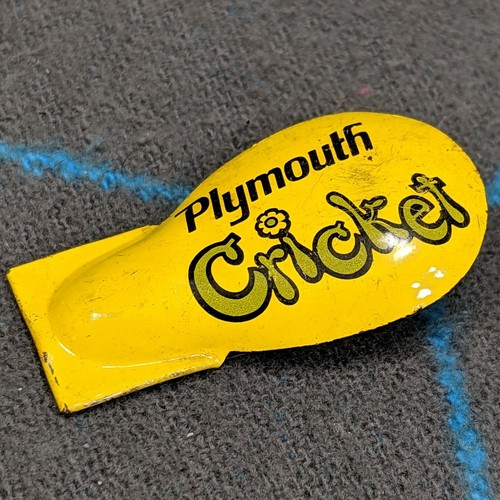
I’m pretty sure this was an annual cicada and after nearly a year underground as a nymph he was probably happy to see daylight.  The little big-eyed monster was singing to beat the band.  I hope little Suzy Q was listening. It was neat to hear an individual cicada’s distinctive voice. One voice seems to get lost when a million are singing. Individually it sounded more like the rapid clicks made by one of the old “cricket” clickers from my childhood. Very rapid I might add.

PLYMOUTH CRICKET Vintage Metal Clicker Toy Noise Maker Chrysler Car Advertising
Toy “clicker” used to advertise Chrysler products. Press it, it clicks.

I know this cicada was a male because female July flies don’t sing.  They don’t have the ability because they don’t have something called tymbals, membranes on the cicada’s exoskeleton used to produce sounds. All the females can do is flick their wings to make a faint clicking sound…or maybe they are just playing hard to get.

Noisy Cicadas Are Widely Misunderstood
A Brood X hanging out. Getty Image

Male July flies on the other hand have several tunes they sing.  For instance, they have the cicada equivalent of “Hey Baby!  You lookin’ good.  What’s your sign? Come on give me a little wing.”  If the female flicks her wings, she is answering, “Hey big boy, how ’bout you come over and see me some time.” If he accepts the invitation, and he will, it is time for faire l’amour.

The males have a defensive song; it is the one you hear when you pick one up.  Sounds like a bee as in, “I’m trying to fool you into thinking I’m a hornet. Put me down this instance!” 

Then there are the male’s most favorite song, the “Ooh Baby, Baby. That was great, how was it for you? Cigarette? Wanna make me a sandwich?” song. 

I have been using July fly and cicada interchangeably because I grew up calling the cicada a July fly.  Something about my Southern upbringing I do reckon. When I Googled July flies to make sure, I did not get a definitive answer.  Some places call the cicada locusts, others Jar flies, or Dog Day flies, still others call them Harvest flies. I’m pretty sure they aren’t locusts because we have locusts too and they look nothing like my childhood cicadas/July flies. As a child, I played with enough cicada shells to know the difference.

Cicada Shell

I grew up in the Fifties and Sixties BAC. BAC as in, Before Air Conditioning.  Oh, it had been invented, it just hadn’t found its way to my abode on Route 2, Highway 521, Fort Mill, SC.  Cicadas, on the other hand, had found their way there and in quantity.  Over the sound of my sweat glands trying to drown me and a window fan, I remember the cycling sound of gazillions of male cicadas singing to their one true love. They usually reached their peak in mid to late July and early August.  I tend to relate them to the hottest days of summer.  The days of ripening corn, tomatoes, and armpits. The Summer days of a gracious plenty of humidity and mosquitoes.

When my bride and I first moved into our “little piece of heaven”, air conditioning hadn’t found its way to our ancient farmhouse in the foothills of the Blue Ridge, either.  My five-year-old daughter came down from her bedroom rubbing the sleep from her eyes and made a whimpering sound as she asked, “Can you turn them off?”  

“Turn what off, Sweet Pea?”

“Those thing-ees, outside my window.  They’re so loud.”

It probably wasn’t the last time I failed her.  July fly choirs are loud reaching ninety decibels which is the same decibel level as a lawnmower.  “Sorry baby.  I can’t turn them off.  Try to think of it as a lullaby.” 

When their singing crescendos in late July, their song seems to cycle into a clackety-clickety, clackety-clickety, clackety-clickety resonance.  The cycling reminds me of dark mornings when I stood outside of a cotton mill weave room waiting for the light to flash foretelling eight hours of what I thought of as hell on earth.   The seven hundred and fifty Draper looms cycled the same way from a distance.  When the weave room door opened, the cycling was replaced by a den of sound with no boundaries.  I doubt many of you know the sound I’m talking about since weave rooms are far and in between these days.

The July flies only live for a few weeks so I will not begrudge them their singing.  The males will sing, the females will click their wings and lay their eggs in twigs and leaves.  In a few weeks, the eggs will hatch, the nymphs will fall to the ground and burrow in for another one, thirteen, or seventeen years.  The “cicadian” cycle will begin again. 

Side trip: “You say circadian, I say cicadian. Let’s call the whole thing off.” It turns out I have been missaying “cicadian rhythm” for years…since I first mis-learned the word. I understand I’m not the only person confused. While cicadas have circadian rhythms they do not have cicadian rhythms. The term “circadian” stems from the Latin “circa” (which means “around“) and “diem” (which means “day”). It has nothing to do with cicadas despite their own rhythms and my own faulty hearing.

A second side trip: “Cricket clickers” were used by paratroopers in World War Two to identify each other after a night jump such as the night before Operation Overlord, the D-Day landing. A single click was to be followed by a double click. If it wasn’t, someone might end up dead. That was the plan at least.

 ***

Cicada painting by Louise Holland

Books by Don Miller may be published at https://www.amazon.com/Don-Miller/e/B018IT38GM?fbclid=IwAR1Smn0AExgDblqvTnANFmKq44x7fzmXw07t9WNlbgdBSpzqv4-X7Pt1EfE

The Old Man

From the historical novel Long Ride to Paradise

Spring 1934

The old man sat on the top step of the weathered porch and watched the movement of children as they played tag and other games.  His vision had deteriorated, and he squinted attempting to see. The cataracts had thickened, reducing the children to ghostly apparitions.  “Too much time spent in the blazing sun, I reckon.” He could still see their blurry forms and could discern the gayly clad little girls in their summer dresses from the little boys in their shorts and long pants.  “Thank God! My hearing is still good,” He thought

Someone wanted to take a picture with their new-fangled camera.  Something called a Brownie. He sat a bit slumped, his hands resting on his thighs.  A ninety-year-old…today, April 9, 1934. 

His once red hair though full, was now white as the cotton bolls bursting in the fall.  His beard, years ago red and sparse, had thickened like his cataracts. White and long, it spread to the middle of his chest. Tobacco juice from years smoking his cheroots, darkened the whiskers at the sides of his mouth.  

thumbnail (2)
Marion DeKalb Rodgers-My great, great grandfather

His gaze shifted to the distant horizon.  His once blazing, blue-green eyes had faded but his vision was still sharp…with the images of the past.  He smiled at his thoughts.  Sometimes he couldn’t remember what day it was, but his memories of times now past were as sharp as the old boning knife he once carried.  Again, he smiled, “Old times there are not forgotten.” He spent most of his time gazing back at the past.  Mostly he spent his time with the memory of Lucretia, now dead nearly sixty years.

He had been lucky.  He had loved three times.  Three fine women had warmed his bed and brought him comfort and joy.  Lucretia, Cassandra, and Josephine.  He had loved them with all his heart. The old man had been unlucky too, he had outlived all three along with his friends. 

He cherished the memories of them all, but Lucretia was special.  She had been his first….  He liked to see her in the emerald green ball dress their first night at Madam Shailene’s.  High waisted, it bared her shoulders and dipped low showing her décolletage.  An emerald ribbon held her mother’s cameo and brought attention to her long and slender neck.  He remembered slowly taking her out of the dress, pressing his lips to her neck…”Damn I almost felt a stirring.”

Lucretia Noel? Allen Kell’s great love

Timmy, Tyler James’ youngest sat down beside him.  A boy of six, Allen Kell recognized the youngster’s voice when he asked, “Whatcha’ thinking about Grampy?”  Timmy was John William’s youngest grandchild.  John William was not Allen Kell’s son but his nephew, Brother Arlo, and Stella’s only child and a sack of hell.  Allen Kell had sired no children but had been adopted by John William, Adeline, and his brood of ten children and at last count, fourteen grandchildren.

“Timmy, I was thinking about Grammy Lucretia.  I wish you had the chance to meet her.  She was a special woman.”

“As special as Grammy Josey?”  He asked as if he might be worried about Allen Kell’s answer.

“Oh yes, oh yes she was…and Josephine loved you very much.”

“I miss her…’specially her molasses cookies.”

“I miss her too…and her molasses cookies.”

He missed his friends too.  All were gone.  James, Sean, Arlo and Stella, Alexandre’ and Shailene. Virgil, Eamon….  All had been gone for ages it seemed.  “Earth to earth, ashes to ashes, dust to dust,” from the book Momma Edwards had taught him to read from.  He had been here too long.  It was time to move on to the great beyond.

All the grandchildren had gathered around his feet, Timmy begged, and the rest agreed, “Tell us a story Grampy.”

Well, maybe it’s not quite time to move on.  The grandchildren agreed.

Excerpt for the newly released Tales of the Drunken Irishman: Long Ride to Paradise. It may be downloaded or purchased at

First image is of Marion DeKalb Rodgers, my great, great grandfather. He came home from the Civil War and lived a life nothing like Allen Kell Edwards but was the motivation for the character nevertheless.

Second image is of a “soiled dove” from Pinterest She is not Lucretia Noel but this is fiction anyway https://www.pinterest.com/pin/262475484508164087/

Southern Horror

I guess I should add a disclaimer from the get-go.  My post is not about the horror of an unexpected swallow of unsweetened tea or being served grits without salt, butter, or cheese.  No, that goes well beyond horror.  This is about the horror genre and its effects on the unexpecting.  The effects of being so scared your feet refuse to move. 

A pair of New Englanders find themselves lost, stuck up to the axles of their ’56 Ford in the middle of a Southern piney woods.  The light is quickly failing over a dilapidated Southern mansion sitting at the end of an overgrown drive.  Brothers, they discuss what to do and decide to spend the night in the abandoned mansion.  Never a smart move if you are familiar with Southern Gothic.

The Pendleton-Graves Home in Sparta, Georgia.
Photo by David Bulit

As they walk to the mansion a flock of pigeons are spooked…the makings of a Southern Gothic horror story for sure.  I can think of dozens of reasons it is a bad idea to spend the night in an abandoned mansion but then I have seen too many movie and TV episodes and have read too many horror stories.

I can tell you exactly when I fell in love with Gothic Horror, specifically Southern Gothic Horror. That would be June 6, 1961.  It was a Monday night in front of a black and white TV.  I watched and listened to a lisping Boris Karloff introduce this week’s Thriller episode, “Pigeon’s From Hell.”  Murder by ax, Voodoo, Zombies, the Blassenville family with a history of abuse, all with bad Southern accents dripping from the screen like Spanish moss hanging from cypress trees.  

I jumped when character Johnny Banner is caught in the afore mentioned flock of pigeons, pigeons that represented the lost souls murdered. Later, I hid my eyes when the same character attempts to split his brother Timothy’s skull with a hatchet.  He does this after having had his own skull split by persons or “things” unknown. 

Love me some murdering Zombies with split skulls although my former Haitian baseball player says Zombies are a movie creation…wait was he Haitian or Jamaican?  Does it make a difference to Zombies? 

A Thriller a Day...: Pigeons From Hell: Season 1 Episode 36
Johnny ready to give forty whacks…wait, wrong movie.

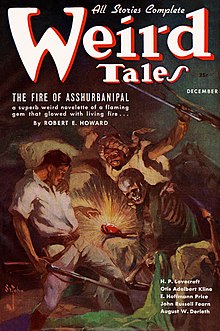
Many years later I would read the short story with the same title the TV episode drew from.  It was written by pulp fiction icon and the creator of Conan the Barbarian, Robert E. Howard.  The story was published posthumously in Weird Tales, a fantasy and horror magazine in 1938.  Despite “Thirties noir speak”, it is a good short story and a better story line than the TV version. 

Weird Tales - Wikipedia
Image from our favorite Free Encyclopedia, Wikipedia

There is something baleful about abandoned Southern mansions, with or without pigeons or Zombies.  Doors and shutters hanging askew, broken windowpanes, paint peeling to expose the silver of many layers of whitewash underneath, old chimneys collapsing under their own weight.  Columns…one can almost hear the voices of the dead and abused in the breeze especially if you have an active eleven-year-old imagination…even an active seventy-year-old imagination.

A Thriller a Day...: Pigeons From Hell: Season 1 Episode 36
The decaying Blassenville sisters killed by…well, you’ll have to watch the episode on YouTube to find out.

In the late Sixties, our group of high school friends decided to explore the Brattonsville Plantation house near Rock Hill, SC…in the dead of night, near what is universally known as the witching hour.  Alcohol might have been a contributing factor; I don’t rightly remember.  I do remember there was a Mars/Venus component as we males wanted to impress the young women among our group.  Young women make young men stupid…stupider.

I won’t deny feeling a bit of trepidation as I thought about how close the name Blassenville was to Brattonsville and wondered if anyone had been practicing Voodoo within its less than comfy confines.  Pigeons?  Are there pigeons?

During those days Brattonsville was the perfect example of a “rundown” and abandoned Southern plantation.  The homeplace has since been renovated to its Antebellum glory as have the other buildings but I do not remember them that way. The mental vision I have is of a place perfect for Southern Gothic Horror.

I remember there was a full or near full moon and the unkept grounds seemed to glow with a light of their own as we made our way to the huge mansion house. In my mind I see the first story entryway door standing open, under the twin galleries’ roofs. The darkness beyond is inviting the lambs to a possible slaughter. 

Homestead House, listed on the National Register of Historic Places in 1971. Restoration of the Homestead began in 1975 and it was opened to the public a year later. http://chmuseums.org/history-hb/

One of the members of our group was well versed in Brattonville’s “supposed” history and regaled us with stories of a less than sane family, abused slaves, the Klu Klux Klan, cruel medical experiments and a Yankee spy hung from a pulley above an attic window.  Owned since before the Revolutionary War by a series of doctors, our historian told tales that made the Bratton doctors seem to be the combinations of Doctors Jekyll, Frankenstein, and Phibes.

We explored all the rooms and made our way to the third-floor attic, site of the medical laboratory and the hanging according to my date’s history lesson.  I had overcome my initial fear and found myself leading the group, not because of my bravery I assure you, but because I had the only flashlight.

Built for John Simpson Bratton Jr. and his wife Harriet Rainey Bratton in 1856. Then called “Forrest Hall,” it is now known as “Hightower Hall”. It could have been its own haunted mansion. https://chmuseums.org/hightower-hall-hb/

As my cute historian told her story of hangings and medical experiments, I found myself in the narrow and empty attic lab…not exactly empty.  There appeared to be examination tables and I fully expected to see a medical skeleton. Instead, a breeze drew my attention to an open window and the figure hung with a perfect hangman’s noose suspended there.   

I froze in place while my five friends took off like scalded haints.  My brain said run, my feet refused.  I might as well have been a tree rooted in place.  I froze long enough to realize what I was seeing was a department store mannequin.  The plastic kind…in fact one of its legs had fallen off.

As my fright dissipated, I found my feet and walked closer.  As the mannequin slowly turned in the breeze, I noticed a note held around its neck by a cord.  My flash revealed a single sentence written in red lipstick…”Mickey Mouse is a Jew.”  Yeah, kind of anti-climactic but a sentence that has kept me wondering for over fifty years. 

My friends? They didn’t leave me…I had the car keys. It did take a while to gather them up.

Historic Brattonsville main house.jpg
The Main House at Brattonsville with the memorable attic window visible
Picture by Zan Maddox of LaValla Maddox Design.

***

***

The history of Brattonsville (documented history) includes  

The original home was built in 1776 by Colonel William Bratton who participated in the nearby Revolutionary War Battle between Patriots and Loyalist, The Battle of Huck’s Defeat. Brattonsville was used in the filming of the movie, The Patriot, starring Mel Gibson.

There was a one night stay by Jefferson Davis as he fled the surrender of Richmond in hopes of reaching Confederate troops in the South or West. (Supposedly this is when the spy was hung but I can find no documentation.)

Dr. J. Rufus Bratton, a York County Klan leader, was the inspiration for the book The Clansman and the 1918 movie it spawned, Birth of a Nation. I am not telling this with any sort of pride but history is history. My guess is Dr. Rufus Bratton was not a nice person when it came to race relations.

***

Don Miller’s authors page may be found at https://www.amazon.com/Don-Miller/e/B018IT38GM?fbclid=IwAR0pjOyQmBib8Mbptaegd7cbdhBk1Dqd3AwEssRjtjCtVGq4zxV2P_c9zKk

***

The featured image is from another Southern Gothic film, Swamp Water, starring Walter Brennan, Dana Andrews, and Walter Huston.

Sunday September 15, 1963

“Justice will not be served until those who are unaffected are as outraged as those who are.”
― Benjamin Franklin

Sunday September 15, 1963…I doubt I paid much attention to the happenings in Birmingham, Alabama in 1963.  I paid more attention on Monday when Walter brought the CBS Nightly News as the family gathered around the black and white TV, chewing soggy TV dinner fried chicken and cardboard mac and cheese. 

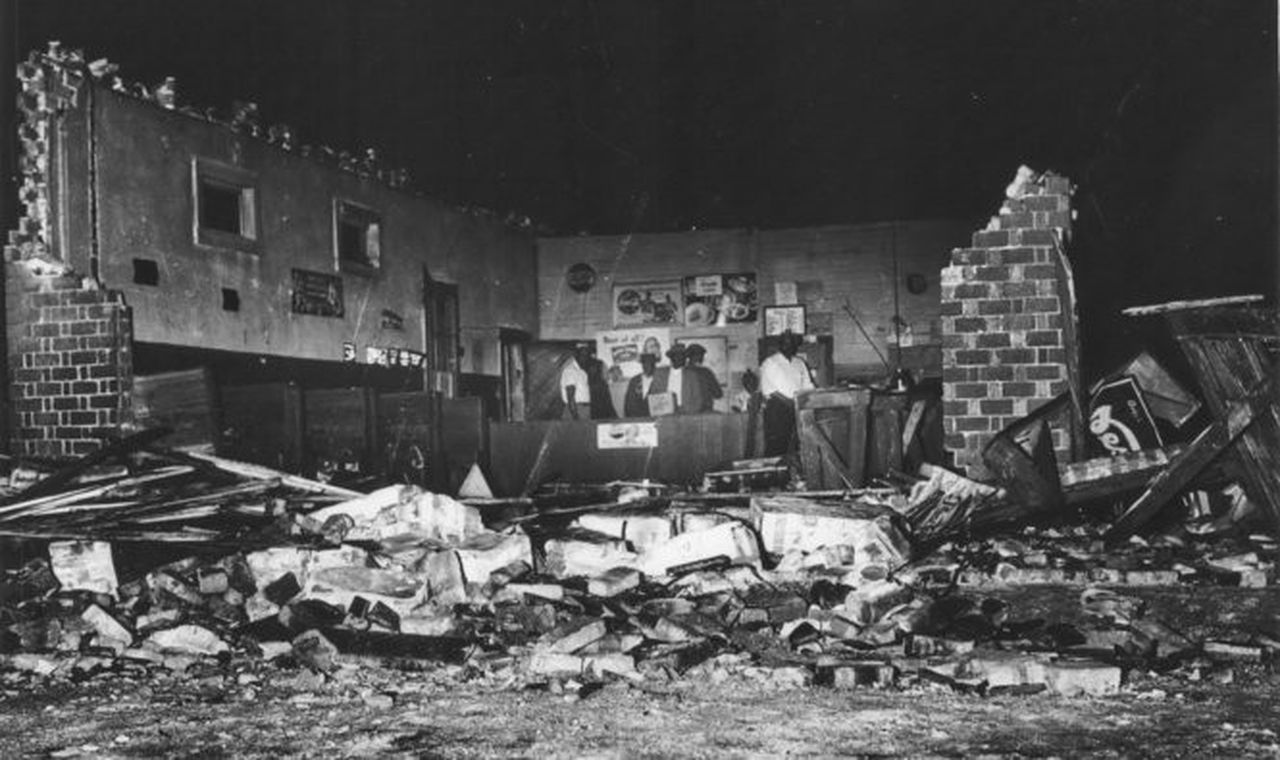
I pay more attention now. The past can be painful. Ignoring the past can be more so. Four young girls, Addie Mae Collins (age 14, born April 18, 1949); Carol Denise McNair (age 11, born November 17, 1951); Carole Rosanond Robertson (age 14, born April 24, 1949); and Cynthia Dionne Wesley (age 14, born April 30, 1949), were killed in the attack as they attended Sunday school…Sunday school. Addie Mae’s sister, 12-year-old Sarah, had twenty-one shards of glass embedded in her face. She was blinded in one eye. Some twenty others were injured and there was another death. Some twenty or more casualties to the war that was Civil Rights.

I do not know what I thought.  I do not know what my family thought.  We were not the types to sit around the dinner table discussing Civil Rights, race relations, and the deaths of four young girls in the city that became known as “Bombingham.” I honestly don’t know where my parents stood on racism and Civil Rights. Considering all possibilities, not knowing is not a terrible thing.

I don’t know for sure what my classmates thought during school that Monday morning. There was no discussion of the travesty that had occurred in my eighth-grade civics class…my all-white class in my little all-white school.

I was thirteen. About the ages of the girls killed at the Sixteenth Street Baptist Church.  I wonder what I thought.  I am sure I was more concerned about the pennant race in the National League than four deaths in Alabama.  The Dodgers were battling it out with the Cardinals and held a one game lead.  On September sixteenth they would begin a series with the Dodgers one game up.  In the American League, the Yankees had run away and hid in 1963.  I knew baseball standings, but I didn’t know the names of the girls now gone.

It is not that I was unfeeling, I was thirteen, an immature thirteen.  I was more concerned about baseball and the Playboy magazine I had snuck into my bedroom.  There was that little blond-haired girl that stirred feelings and reactions I simply did not understand.  Alabama was a place far, far away and the lives lost unknown to me.

Occasionally thoughts would enter my teenage mind.  “How is this right?”  I was not ready to go marching with Martin Luther King but images of burning buses, fire hoses, and now rubble were having an effect…a lasting effect.

The rubble

My grandmother had taught the Golden Rule. I couldn’t understand why we weren’t treating these people the way we wished to be treated.  Why were people so angry and why did they all look like me? Why didn’t I have the guts to act?

I couldn’t understand the lack of empathy from friends either…as I can’t understand now.

The last of the three bombers died in prison in June of 2020…of natural causes. That doesn’t seem fair. (A fourth died before he could be brought to justice). I will not say their names. He was eighty-two.  He was not brought to justice until 2001…none were brought to justice in 1963, not because their identities were unknown, because of the system that was in place…a system that is still hanging on in many places.  The three freely lived their lives as if nothing had happened, one murderer for thirty-seven years.  He lived freely three times as long as the little girls whose lives he helped to take. 

Evil incarnate: the last of the Birmingham bombers to die. I will not say his name.

I’m thankful I’m not the same person I was in 1963.  I was a child of the time and carried my racism with me well into my adulthood.  My change occurred over time, there was no sudden flipped switch.  It was the realization that what I saw and heard was at odds with what I had learned despite my grandmother’s best teachings.

I still have my moments.  I still carry my racism. Thoughts I wish I didn’t have, thoughts I pray forgiveness for.  I pray for understanding, pray for peace among all God’s children.  Prayers that don’t include forgetting but do include forgiveness.  Prayers for taking the first step toward healing which is the recognition and acceptance of our sins. 

Don Miller writes on various subjects that bother him so. His author’s page may be found at https://www.amazon.com/Don-Miller/e/B018IT38GM?fbclid=IwAR0C336Kj_qD1fHk40ybRg8b7CHHd6f8KYcGIC44-qIqsbZJGjv0WdXaeKI


The Art of Lookin’ Busy


A big for his age youth sporting a lint covered flattop staggered through his first day at the Springs Mills White Plant.  Staggered because in the first hour the man tasked with teaching the youth the art of ‘takin’ up quills’ attempted to crush the youth’s skull with one of the metal quill cans.  It was the youth’s fault, not the young man’s.  The youth was bloodied and staggered, and it was the beginning of a series of the first day on the job accidents, but that is a story for another time.  Clumsy much?

(In textile parlance, a quill is or was the wooden part of a bobbin the thread is wound on.   The bobbin would seat into a shuttle running perpendicularly to the warp threads. When the thread in the shuttle ended or broke, the bobbin was kicked out into a metal ‘can’ and replaced automatically from a magical gizmo called a battery.  I’m a bit short on the science of it all and you aren’t here for a lesson.  A battery with bobbins is shown below.  The wooden portion of the bobbin is the quill.)

I was the big for my age, crew-cut sporting youngster.  Tall for my age, and I got no taller, I was immature by anyone’s standards at any age.  Big for my age and dumb might have been a requisite for the job I was doing.  A spare hand, I did the jobs regularly employed folks were glad they didn’t have to do or filled in where needed.

I understood hard work having grown up on a farm and having been hired out as farm labor since I had turned eleven or twelve.  Farm labor is hard, but cotton mill labor is a horse of a different color as the old farmers might say.

I had worked at Springs for a week and was worn to the bone…battered and bruised, to the point of tears at various times. The narrow alleyways between the looms left my shoulders marked with scrapes and abrasions.  My body was a skin covered sack of pain.  It was a Saturday and all I could think of was the day off on Sunday…except it would be followed by a Monday when it all would begin again.

When I ran into a much older cousin in the water house I received a life lesson I didn’t know I needed. The water house in mill parlance is a combination bathroom, smoking area, and an escape from the noise and heat of the mill.  An oasis of relatively cool, quiet, and stinky aromas.

As I started to walk out, Charles, a much older cousin who had grown up just below my home, stopped me and put his arm across my sweaty, lint covered, bruised shoulders.

“I been watchin’ you boy,” tapping me on a sore arm with his pointer finger.  Charles was what was called a warp hand who worked out to the tie-in room.  It seemed to me warp hands had a good bit of time for watchin’…or playing practical jokes.  Charles, and his buddy Tommy, were masters at playing practical jokes, “Go down to the parts room and get me a loom stretcher, will you?”   It was the first of many practical jokes endured by the young group of spare hands.  I wasn’t singled out any more than anyone else.

The man in the part’s room cocked his head giving me the side-eye, “Loom stretcher, huh?  Charles sent you down, didn’t he?”  Got me.   

Northrop Loom - Wikipedia

Loom with visible battery and warp.  The warp is the big spool of thread.  A quill can is seen below the battery.  Image https://www.timetoast.com/timelines/industrial-revolution-1750-1900-f8002b6a-a164-4f2c-bea9-a0d54908556d

Back to Charles in the water house.

“You work hard but you got to learn to work smart.”  What Charles really meant was “learn to not work if you don’t have to.”

Beings Charles was an elder I decided I was supposed to listen intently…plus he had a scholarly look going…in a Howdy Doody kind of way.  I really felt I needed to learn how to work smarter.

“This ain’t no horse race and you ain’t learned the art of lookin’ busy when you ain’t.  You got to slowwwww things down.  Shifts are eight hours and you doin’ more than your buck sixty-five an hour.  Whatchu’ do after you finish your quill job?”

“I have to strip quills.”  Nothing provocative, I had to remove the leftover thread from the bobbins so the quills could be reused by the spinning room.

“An what do you do when you get through strippin’ quills?”

I pondered a moment wondering if this was a test, “I don’t know, I’ve never gotten through.”

He popped me on the shoulder as if I had had a major philosophical breakthrough.

“There you go.  You ain’t nevah gonna get through.  You could work a month of Sundays an’ you’ll nevah, evah get through.  The only time you’ll be through is when you die.”

So profound, I pondered too long on his words and Charles began again.

“Pretend you do get through.  Whatchu’ think gonna happen then?”

“They’ll find something else for me to do?”

Shooting me with his pointer finger and thumb, he exclaimed, “Bingo!  You nevah get through or if you do, ole Coley Spinks is gonna come along and give you something else to do.  You got to learn the art of lookin’ busy while doing nothin’, boy.”

Just then, as if to add an exclamation point, Coley Spinks, the second hand walked in.  Folding his Popeye sized forearms sporting the Marine Corp ‘globe and anchor’ tattoo across his ample chest, Coley gave us a head jerk which translated to, “You’ve spent too much time in here, get out and earn you wage.”

Charles scooted out the door with me behind, but Coley planted a flat palm against my chest, jolting me to a stop, “I don’t know what line of bull Charles was spouting but don’t listen to a damn thing he says.”  The age-old disagreement between management and the workers?

“Yes sir, Mr. Spinks.” 

But I did listen to Charlie and endured his harmless practical jokes even if I never quite mastered the art of looking busy or falling for practical jokes.  I practiced a great deal and ran into many fellow workers who had truly turned it into an art form.

I am more of a “git er done, git er over with” kind of guy and I guess it served me well.  Mr. Spinks came to me on my last Saturday before the school year began and proposed, “We’d like you to work Saturdays during the school year if you are a mind to.”  Eight hours of hell for $13.20 before taxes.  “Yeah, okay.  Thanks.” 

I’d work there for three more summers and Saturdays during the school year.  Later, I would work part-time in a cotton mill during my college days.  I never did get done. whether it was stripping quill or some other grunt job, and I ain’t dead yet.  Instead, I moved on to another vocation I never finished until retirement.

It was the mills themselves that died at the end of the last century…something I find saddening.  I would never want to return but I do appreciate the lessons I learned.

***

For more of Don Miller’s shenanigans, visit his author’s page at https://www.amazon.com/Don-Miller/e/B018IT38GM?fbclid=IwAR3EyTJntrwvN_Yq4p_rpDH3Ynurn688xmdNvzJhe_fH7NSBku3Zen-6yb0

The image is of belt driven looms take from one of the Lowell Mills.  https://www.newschoolers.com/news/read/The-List-Newschoolers-Member