A Long, Hard Year

“When you are sorrowful look again in your heart, and you shall see that in truth you are weeping for that which has been your delight.”
― Kahlil Gibran

I sat with a group of friends at a local café. It is usually a time of joy, sometimes when I need it the most. This was one of those times. It is March and I have begun to contemplate the past year since Linda left me.

My friend Val, the eighty-two-year-old teenager, asked how Linda and I met and cautioned, “If it is too hard to talk about….”

“Val, I never find it hard to talk about Linda,” I answered. It is never too painful to talk about her. It is the dark, quiet times when I am alone with my darkest memories that I find hard. A vibrant, loving woman reduced to an urn of ashes is what is hard. Still, I left our gathering smiling, my mood lightened, even if it was short lived.

I only share the good times when I talk about Linda. There were thirty-eight years of good times. Tales of our first meeting and the winding road that we traveled trying to acknowledge we were in love were the subjects of the day. The meeting on top of a football field’s press box or was it when she stood with an inflated pumpkin on her head? The trip from hell to Charleston with her then boyfriend, my roommate. A trip to a local dive, The Casablanca Lounge, that brought love more into focus. In that conversation with Val, I realized I had an anodyne for the deep darkness I have been feeling for the past twelve months.

I have an old photograph of Linda being Linda. I keep it close by to remind me of who Linda was…not what she became. Hands apart, she is sticking her tongue out. The photo is dark but not as dark as her curls, the dark curls I loved and remember most. This is Linda, the Linda I must remember. The Linda that still makes me smile.

I must also remember the Linda of the last year of her life. I have no choice. Even in the darkest moments there were pinpoints of light. No matter how weak she became, there was still a light that shined brighter than all others. She struggled with names and called everyone “Baby” and told them, “That’s alright, it’s okay” even when it wasn’t.

Still, the darkness encroaches along with the bitterness I feel. Life played such a terrible trick. From the joy of being told, “You are in complete remission,” to the stoke a scant week later. Four months later she was gone…four months that seemed like four lifetimes for all the wrong reasons.

Despite the photography, I don’t think I will ever get over the bitterness. Despite the wonderful memories, I find myself angry. Sometimes, I get angry at myself. I get angry at God. I could have done more. I could have held her more, danced with her more, kissed her more.

God could have not been such a hateful trickster. Why did you take her from me in such a painful manner?

Selfishly, I feel robbed. She is gone and I am left to act as if I am still alive.

The lyrics of an old tune popped in my head, “Don’t it always seem to go. That you don’t know what you’ve got ’til it’s gone.” I always knew what I had, and it made her loss even greater. There is a hole in my heart I never want to heal.

Even with bitterness there is room for joy. Life without Linda is a two-sided coin. Bitterness on one, the joy that was Linda on the other. I find that there is always something to smile about even in the darkness of absence.
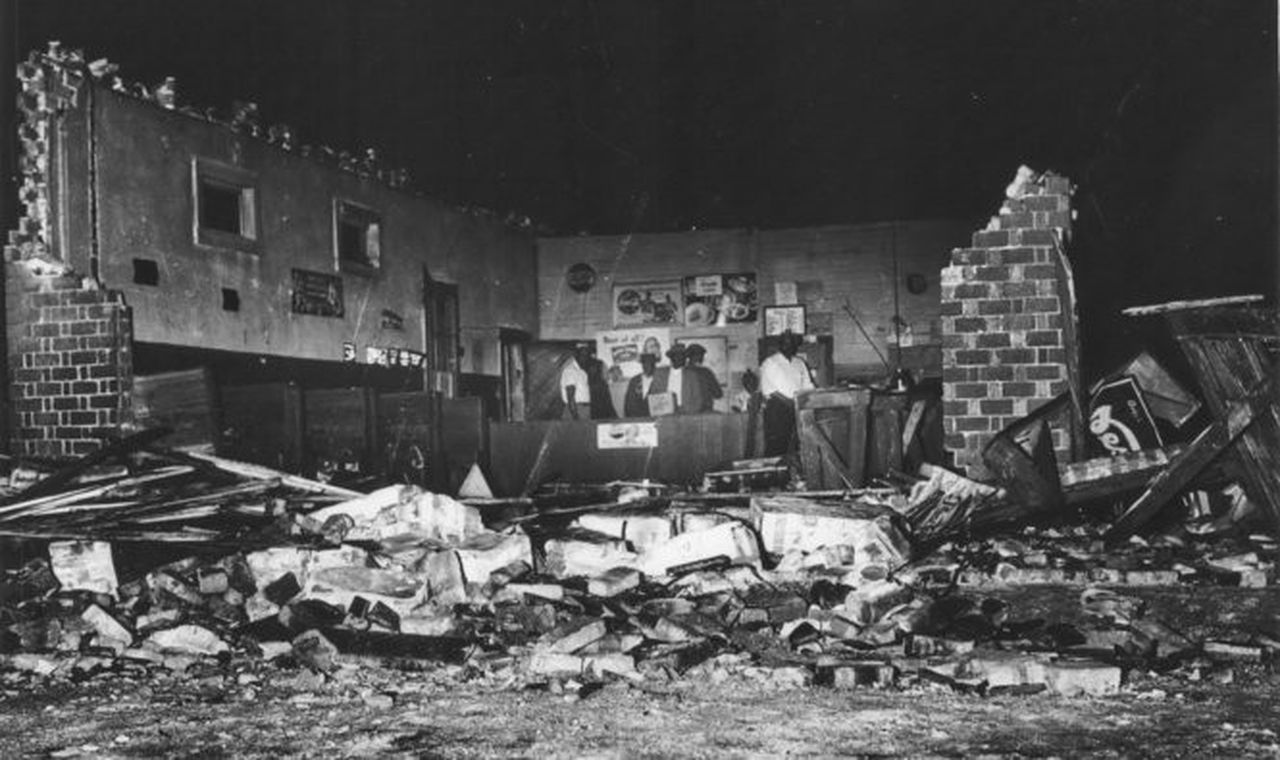
Sunday September 15, 1963

“Justice will not be served until those who are unaffected are as outraged as those who are.”
― Benjamin Franklin

Sunday September 15, 1963…I doubt I paid much attention to the happenings in Birmingham, Alabama in 1963.  I paid more attention on Monday when Walter brought the CBS Nightly News as the family gathered around the black and white TV, chewing soggy TV dinner fried chicken and cardboard mac and cheese. 

I pay more attention now. The past can be painful. Ignoring the past can be more so. Four young girls, Addie Mae Collins (age 14, born April 18, 1949); Carol Denise McNair (age 11, born November 17, 1951); Carole Rosanond Robertson (age 14, born April 24, 1949); and Cynthia Dionne Wesley (age 14, born April 30, 1949), were killed in the attack as they attended Sunday school…Sunday school. Addie Mae’s sister, 12-year-old Sarah, had twenty-one shards of glass embedded in her face. She was blinded in one eye. Some twenty others were injured and there was another death. Some twenty or more casualties to the war that was Civil Rights.

I do not know what I thought.  I do not know what my family thought.  We were not the types to sit around the dinner table discussing Civil Rights, race relations, and the deaths of four young girls in the city that became known as “Bombingham.” I honestly don’t know where my parents stood on racism and Civil Rights. Considering all possibilities, not knowing is not a terrible thing.

I don’t know for sure what my classmates thought during school that Monday morning. There was no discussion of the travesty that had occurred in my eighth-grade civics class…my all-white class in my little all-white school.

I was thirteen. About the ages of the girls killed at the Sixteenth Street Baptist Church.  I wonder what I thought.  I am sure I was more concerned about the pennant race in the National League than four deaths in Alabama.  The Dodgers were battling it out with the Cardinals and held a one game lead.  On September sixteenth they would begin a series with the Dodgers one game up.  In the American League, the Yankees had run away and hid in 1963.  I knew baseball standings, but I didn’t know the names of the girls now gone.

It is not that I was unfeeling, I was thirteen, an immature thirteen.  I was more concerned about baseball and the Playboy magazine I had snuck into my bedroom.  There was that little blond-haired girl that stirred feelings and reactions I simply did not understand.  Alabama was a place far, far away and the lives lost unknown to me.

Occasionally thoughts would enter my teenage mind.  “How is this right?”  I was not ready to go marching with Martin Luther King but images of burning buses, fire hoses, and now rubble were having an effect…a lasting effect.

The rubble

My grandmother had taught the Golden Rule. I couldn’t understand why we weren’t treating these people the way we wished to be treated.  Why were people so angry and why did they all look like me? Why didn’t I have the guts to act?

I couldn’t understand the lack of empathy from friends either…as I can’t understand now.

The last of the three bombers died in prison in June of 2020…of natural causes. That doesn’t seem fair. (A fourth died before he could be brought to justice). I will not say their names. He was eighty-two.  He was not brought to justice until 2001…none were brought to justice in 1963, not because their identities were unknown, because of the system that was in place…a system that is still hanging on in many places.  The three freely lived their lives as if nothing had happened, one murderer for thirty-seven years.  He lived freely three times as long as the little girls whose lives he helped to take. 

Evil incarnate: the last of the Birmingham bombers to die. I will not say his name.

I’m thankful I’m not the same person I was in 1963.  I was a child of the time and carried my racism with me well into my adulthood.  My change occurred over time, there was no sudden flipped switch.  It was the realization that what I saw and heard was at odds with what I had learned despite my grandmother’s best teachings.

I still have my moments.  I still carry my racism. Thoughts I wish I didn’t have, thoughts I pray forgiveness for.  I pray for understanding, pray for peace among all God’s children.  Prayers that don’t include forgetting but do include forgiveness.  Prayers for taking the first step toward healing which is the recognition and acceptance of our sins. 

Don Miller writes on various subjects that bother him so. His author’s page may be found at https://www.amazon.com/Don-Miller/e/B018IT38GM?fbclid=IwAR0C336Kj_qD1fHk40ybRg8b7CHHd6f8KYcGIC44-qIqsbZJGjv0WdXaeKI


Prince Albert in a Can


I watched as the old man sat on the couch slowly loading his pipe.  Using “Virginny” tobacco from a red metal can, arthritic fingers made the process a slow one.  He was in his very late eighties, I in my middle teens.  It was the middle Sixties and I had driven my grandmother to visit her bedridden mother on Christmas Day.

“Ole Pap” had been celebrating the birthday of our Lord and was at least one nip past a “snoot full.”  Drinking was not his holiday tradition unless every day was a holiday.  Normally he did not progress to the one or two “nips past sober” side of the line.  So adept at maintaining the perfect buzz, not quite sober, not quite drunk, I never realized my great grandfather drank until I found him sober one day.  It was not a pleasant revelation.  My grandmother was not happy with her father and left me to be entertained by his drunkenness.

We sat on a long and narrow porch, enclosed when dinosaurs ruled the earth.  Wide windows lined the southeast facing wall and what heat had been generated by the midday sun had quickly left us.  Still, we sat as he smoked his Prince Albert and talked.

In a slurred voice, he told me he had smoked since he was thirteen and taken to nipping at fifteen.  Nipping had turned into something else entirely.  Great Grandpa passed when he was ninety-eight and as far as I know, was tamping Prince Albert tobacco into his Medico Pipe right up until he died…along with drinking a pint of “store bought” brown liquor a day.  Weaning him down might have been what finally killed him.

He could sit for hours, puffing silently on his pipe.  Just puffing enough to keep it burning, staring off at who knew what.  Half blind from cataracts, I’m sure he was staring back at the past.  From the old pictures I had seen he was never a big man but seemed to be collapsing in on himself and shrinking before my eyes.  The couch seemed to swallow him.

Rheumy-eyed and toothless in his very old age, the old man was still a hard knot, one I was terrified of.  Despite his small stature, from the stories I had been told, he had cast a huge shadow.  He was a hard man who lived in hard times.  According to him, “A man had to be hard to survive” …Darwinism at its best…or worst.”

He had seen much history.  The Spanish American War, airplanes, and automobiles. The Great War, The Great Depression, paved roads and the magic of electricity, World War Two, a man stepping on to the moon.  Something tells me he wasn’t too concerned about those events…unless they related to scratching out a living.

“Ole Pap” ran a general mercantile store at a railroad water and fuel stop during the age of steam.  In his free time, he hammered nails as a carpenter until he could buy a piece of land.  I believe he was a bit of a hustler, anything for a buck kind of guy, including making corn liquor during the depression and prohibition…or maybe that’s a story from an overactive imagination.

He married a woman well above his station and helped her raise ten “youngins” to adulthood he said.  “Raising his own workforce.”  Ten children, he recognized and if my grandmother was to be believed, at least one that he didn’t recognize. I believed her.

He hoed corn and grew tomatoes until he was in mid-nineties.  All the while consuming most of his corn from a jar or a bottle…a pipe stuck between his gums and a tin of Prince Albert stuck in the front pocket of his bib overalls when he wasn’t nipping.

I wish I had asked him more questions about the life at the turn of the Nineteenth Century.  I had been taught that children should be seen and not heard…I took it too literally.  Too literal and I was scared to death of him.  I don’t know why he terrified me, he never mistreated me.

I’m sure he was tough on his children, maybe even cruel.  All were hard nuts in their own rights, especially the elder ones.  My grandmother, his oldest, certainly was a hard nut to crack…and she loved her father dearly warts and all.

I do have fond memories, mainly of large family gatherings, cousins galore.  They seemed to always end on the narrow back porch…or wide front porch. Tales being recounted or maybe even created.  Great Grandpa lightly puffing on his pipe, a can of Prince Albert somewhere close by.

If you liked this story you might wish to download or purchase “Pathways” or “Cornfields…in my Mind.”  They can be found at  https://www.amazon.com/default/e/B018IT38GM?redirectedFromKindleDbs=true

The image came from Argosy Magazine, November 1962