A Titch’s Wit

I am contemplating my stupidity. According to the weather liars it’s twenty-seven with a wind chill making it feel like nineteen. I know. You northerners are cranking up the grill and getting the beer put on ice. Here in the foothills of the Blue Ridge, we might be headed toward a modern ice age. I could be in Florida where the cold snap is expected to cause cold-stunned iguanas to fall from trees.

Fear not. It will wake up when it warms up.

Why am I contemplating my stupidity? It is walking day with my best friend, Hawk. Normally we walk on Fridays but scheduling problems and Covid reared their heads, so this is the first walk in three weeks, and it is on a cold and windy Saturday morning.

Two seventy-one-year-olds braving the elements, to set in their ways to ask, “Do you think we ought to just go to the coffee house have a cup of coffee?” Noooo. We are much too manly to do something smart. Neither one of us wants to admit we would rather be sitting in the warmth sipping a dark roast.

Southerners don’t do cold.  Add snow or ice and we are damn near suicidal. It became apparent that Southerners don’t do cold when I looked up “Southern Sayings About the Weather.” For every Southern saying about the cold, there were dozens of heat and humidity sayings and right now you can guess which one I would prefer to be using.

As cold as a well-digger’s butt in January” is about descriptive as we get. That one along with “Cold enough to freeze the balls off a brass monkey”, and “as cold as a witch’s tit in a brass bra” are not even Southern. We plagiarized them from our Northern neighbors or some of our English forefathers and foremothers.

Per normal, this sent me down one of my many rabbit holes. Where did such sayings come from?

While freezing the balls off a brass monkey seems to be a physical impossibility, what if I told you that a brass monkey might not be what you are thinking it might be. As one story goes, cannonballs on English ships used to be stored aboard ship in piles, on a brass frame or tray called a ‘monkey’. In very cold weather the brass would contract, spilling the cannonballs: hence very cold weather is “cold enough to freeze the balls off a brass monkey”.
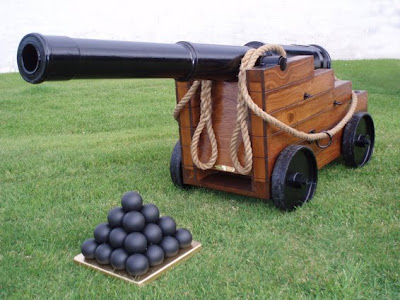
Cannon balls sitting in a Brass Monkey with a cannon from a British sailing ship.

Notice I said one story, a story that probably isn’t true. According to www.lexico.com, the term ‘monkey’ is not recorded as the name for such an object. “The facts, ma’am, just the facts.” The rate of contraction of brass in cold temperatures is unlikely to be fast enough to cause the reputed effect and the phrase was first recorded as “freeze the tail off a brass monkey” which removes any essential connection with balls, brass or otherwise. Why let facts get in the way of a delightful story?

It seems that the phrase, “cold enough to freeze the balls off of a brass monkey” is simply a humorous reference to the fact that metal figures will become very cold to the touch in cold weather. Descriptive but boring.

Can you tell which one is cold?

So, what about a witch’s mammary glands encased in a brassiere made from an alloy of copper and zinc? One might think Salem Witch Trials or some old English saying but it is not…at least not in print and the saying is not ‘that’ old. It may have been used earlier but first appeared in print when American historian and writer Francis Van Wyck Mason wrote Spider House in 1932. The exact quote was “As cold as a witch’s tit outside.” The addition of the brass bra probably connects to the brass monkey’s testicles in some way.

Actually, a Bronze Age Goddess Bra, not brass. Probably worn in a Russ Meyer sexploitation film although the bra might not be large enough for one of Russ’ heroines.

Interesting fact from the 1700s, the prime time for witch trials. Women with erect nipples were considered to be in league with the devil. This explains an interesting correlation between an increase in witch trials and cold weather…and why a brass bra might have been utilized for protection had brassieres been invented.

That leaves us with “as cold as a well digger’s butt in January.” Do I really need to explain this? If you have ever watched a chubby plumber at work, you have an idea of its origin although plumbers aren’t well diggers.
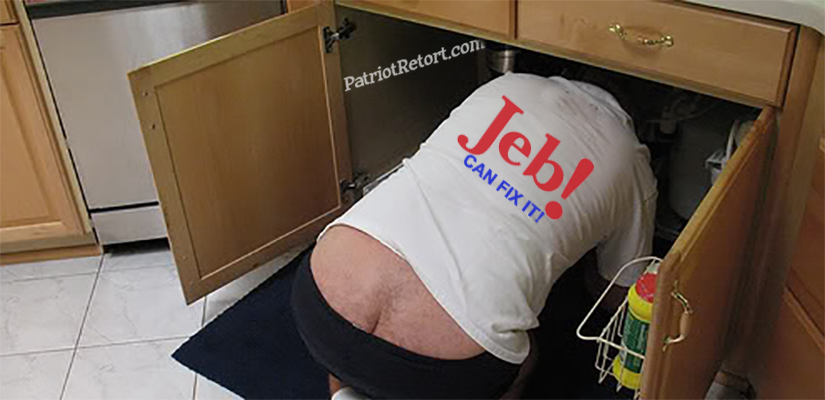
I’m sure Jeb is a good plumber

There is no scientific reason for a well digger’s rump to be colder than say an ice skaters. “As cold as an ice skater’s butt” is more mentally pleasing than the crack of Ole Jeb’s butt peeking out of his wrangler jeans while he works on my grease trap.

We survived our walk and the rabbit hole fell into. The walk wasn’t bad until the wind blew. Well, it snowed on us. Maybe ten flakes in a minute. We also found we weren’t the only fools out and about. I really enjoyed certain runners in their lycra body suits although I’m sure several could have been put on trial in 1700s Salem for witchcraft. 

For more go to Don Miller’s author’s page at https://www.amazon.com/Don-Miller/e/B018IT38GM?fbclid=IwAR1ThWNJrpUfzoiZb_aT5DzaIQX1-DDiSJiDHVXAzn0ttDYNhLs3VW5w6SY

A Stitch in Time Saves Nine

“After all, a woman didn’t leave much behind in the world to show she’d been there. Even the children she bore and raised got their father’s name. But her quilts, now that was something she could pass on.” ― Sandra Dallas

First, the saying for those too young to have heard it “A Stitch in Time Saves Nine”–I can’t think of the last time I heard the old saying used. I suspect my grandmother last used it in my presence. The ‘stitch in time’ means the prompt sewing up of a small hole or tear in a piece of material may save the need for more stitching later when the hole has become larger.

So, what does it really mean? I tend to use ‘take care of the trivial things and the big ones won’t ever come up.’ They mean the same thing but ‘a stitch in time’ is more colorful and honestly, has nothing to do with this story unless your “stitch in time” is made with a Singer Sewing Machine.

We’re twenty-one days from Christmas day as I write this and I’m both flooded with Christmas memories and filled with the trepidations associated with depression and not having purchased or created the first Christmas present. The likelihood of me ‘getting on the stick’ is low so instead of “saving nine” by rushing out and Christmas shopping I’ll sit here basking in memories from Christmas’ past.

My grandmother was a creator of Christmas gifts, most sewn on an old Singer Trendle Sewing Machine. She came from a time when Christmas gifts included fruit and nuts, corn shuck or rag dolls, peppermint candy, hand stitched quilts and such. A time when gifts were made or were items, we take for granted now.

See the source image
A corn shuck (husk) doll for sale on Ebay. My Grandmother is rolling in her grave.

She told me once how much she enjoyed the tangerines her father, a mercantilist, brought home for Christmas gifts. I didn’t think too much about that until I realized how much harder it was to find tangerines in the rural 1910s as opposed to the rural 1960s.

I have the quilts she sewed for me. Patchwork quilts made from cloth saved from over the years. I’m sure many pieces had special meanings, others just filler. Some of the piece’s hand sewn, others sewn with that old Singer.

She also gave stockings full of gifts that meant something to her. Gifts like she received as a young girl. Apples and oranges, a handful of nuts, a box of butter crème mints or peppermint. Pencils and small flip notebooks. When in college, a book of stamps or postcards to make sure I wrote her.

One year she gave all her grandbabies quilted stockings she made. Somehow, I ended up with one so ugly it was beautiful. Ugly because of the orange and green backing, not my favorite colors, beautiful because she made it.

Both my grandmother and mother had Singer Sewing Machines, my mother a more modern electric model. I remember, as a child, traveling to the Belk Brothers or Woolworth with my mother and grandmother as they perused the stacks of dress patterns until they found something “new” they liked. From there they would go to the fabric section to pick out the cloth they wanted, the salesperson using the length of her stretched out arm to her nose method of measuring.

McCall’s dress pattern from Pinterest

Cutting out the cloth using the patterns, pinning it all together before carefully stitching it up. My mother’s exclamations when something didn’t sew quite right causing her to tear out her seams and start over. Finally starching and ironing out the finished product before wearing it to church on Sunday.

I would say sewing became passe after my mother’s generation. Affordable clothing became too prevalent and time too precious. My wife has a Singer that was her grandmother’s. My bride has assured me she knows how to use it but never used it in my presence. She would be quick to tell me that “nowhere in our marriage vows did I agree to obey or sew. Loving and honoring were momentous enough.”

See the source image
Vintage Singer Sewing Machinehttps://www.collectorsweekly.com/stories/283353-vintage-singer-sewing-machine

I have a former student, now friend…a fellow traveler down life’s pathway. She still sews but she is also a throwback to a different time. I guess a throwback to when sewing was a way to while away the hours productively and the quilting group a social meeting opportunity…if you read gossip into that it is your fault. My friend is a producer, a creator…may be a gossiper too.

Twenty-one days…I have time to do a bit of producing although the creative gene may have skipped a generation. I can make a birdhouse if I can find a hollowed-out log or weave a grapevine wreath. I have a gracious plenty of raw material and they tend to make themselves. 

I just won’t be using a Singer Sewing Machine. I have a mental vision of sewing myself into a cocoon.

***

Don Miller’s newest book “Pig Trails and Rabbit Holes” may be purchased or downloaded at https://www.amazon.com/Pig-Trails-Rabbit-Holes-Southerner/dp/B09GQSNYL2

A Pig in a Poke


The dryer went out last night.  This morning I’ve already ordered a replacement heating element and watched a video on how to replace it.  I can do this…if I can stay away from one of the voices in my head.  It’s Natasha Negative, she’s reminding me that I’m a f@#$ up when it comes to home repairs.

The element won’t be here until tomorrow and it is pouring rain outside.  I have plenty of time to follow the pig trails my thoughts have traveled this morning…like ordering a heating element sight unseen from a very large and rich internet company.  I have ordered a ‘pig in a poke’…and it ain’t my first time.

It’s a saying I’ve heard all my life but for some reason, in the darkness of this rainy pre-dawn morning, I decided to search the whys and the wherefores…which led me to some other why and wherefore…and then to another why and wherefore…just the “pig trails” my mind sometimes follows.  Kind of like the free history lesson you didn’t want but are going to get if you keep reading.

After the Scot-Irish portion of my ancestry made the trip from across the big pond to Pennsylvania or Virginia in the early 1700s they meandered southward until happening upon “the Indian Lands” bordering on the Catawba River sometime after 1750.  They brought words and sayings with them as they came…and probably made up a few new ones too.

Located in the tiny panhandle of South Carolina, between the Queen City of Charlotte and the Red Rose City of Lancaster, my ancestors found the land fertile and the natives receptive.  So receptive were the natives, they gave up their rights to their own ancestral lands believing it was not theirs to sell and that no one really could own it.  That belief was a mistake until they were awarded a settlement that kept the city of Rock Hill from falling into their hands.

A thriving agrarian society was founded and those remaining Native Americans who didn’t cross the river to live on their reservation, assimilated into white society taking Scot-Irish names such as Pettus, Rodgers, Griffin, Wilson….

My grandmother, a Rodgers who became a Griffin, continued to use words and sayings brought from the ‘old countries’ from years ago along with others acquired by our forefathers as they trekked southward through the mountains of Appalachia in Virginia and North Carolina.

We were never children, we were ‘chaps’ who wore ‘britches’.  We ‘hollered’ up the ‘holler’ and were ‘fixin’ to go someplace or do something.   We had paper bags called ‘pokes’ and burlap bags called ‘croaker sacks’ (croker sacks?) which are the pig trails my mind chose to follow.  Pokeweed, poke sallet or poke salad, poke a hornet’s nest, paper poke.

‘Poke sallet’ (poke salad) has nothing to do with paper bags…and having eaten it, little to do with salad either.  It would be more closely related to a ‘mess of turnip greens’ or a cooked salad (sallet) of greens.  Even the use of the word poke is different.  The poke in ‘paper poke’ comes from the French word poque, meaning pouch, while the ‘poke sallet’ poke is an Algonquian or Powhattan word meaning blood or dye.  Pokeweed has red berries that will produce a blood-red dye and red stems that will produce…I have no idea.

Poke a hornet’s nest is pretty self-explanatory and should be avoided.

Pokeweed grows wild in the South and despite being poisonous, its tender immature leaves can be cooked, carefully, in the same manner as turnip or mustard greens.  Carefully means that you should bring the chopped leaves to a boil and drain off the water, repeat four or five times before finally preparing them as one might prepare turnip greens…you know with fatback or ham hocks, some vinegar and red pepper flakes along with a slab of cornbread runnin’ in butter…sorry I got carried away.

As usual, I drift.  My ‘pig trail’ began with a ‘pig in a poke’ and took a sharp left at ‘letting the cat out of the bag’ before colliding with the unrelated ‘croaker sack’.

Some English farmers, a deceptive group it would seem, attempted to pull the wool over the naïve eyes of some unsuspecting souls by substituting a cat for a purchased suckling piglet.  The old bait and switch, I reckon.  The unsuspecting mark would take the poke home and not discover the switch until ‘he let the cat out of the bag.’  I was this day old when I realized the two sayings were related.

I was also this day old when I learned ‘pulling the wool over one’s eyes’ has nothing to do with sheep…and why would it?  It dates from the days when English judges began to wear wigs.  The saying came from pulling the wool or wig over the judge’s eyes so he could not see the truth despite it being right in front of his face…the truth was as clear as the nose on his face.  Maybe not.

I have gone far afield from pigs and paper bags.  A symptom of my affliction?

My meanderings came to a screeching halt with ‘croaker sacks’ which has nothing to do with pokes unless it relates to a paper poke I guess.  My ancestors were masters at recycling, reusing or repurposing and heavy burlap bags were no different.  Burlap bags usually contained feed but after their primary use had been realized, are great to contain other stuff that needs containing, especially those that need to stay wet…like fish or frogs.

There is a croaker fish, several versions found off the Atlantic shores.  I’ve caught them but never put them in a burlap bag before cleaning, battering, frying and serving with tartar sauce and lemon slices.  It’s still early but I’m getting a hankerin’ for fried fish with some hush puppies and cabbage slaw.

I have used burlap bags to store frogs in.  Frogs croak…croaker sack.  It can’t be a coincidence.

Been frog gigging?  I have but it has been a while and my guess is it will be in another life before I go again.  In the dead of night on a pond bank or in a shallow draft boat, shine a strong light ashore which both freezes the frog and causes his little eyes to light up, gig him, and put him in the bag…a ‘croaker sack’.

Sounds cruel and I guess it is, but fried frog legs are sho nuff good.  Battered or unbattered, served with stone-ground grits smothered in pan gravy, maybe a salad and a glass of sweet Southern tea. They do taste like chicken and also kick around when they hit the hot grease.  Hum.  “Jumpin’ like a frog leg in hot grease.”  Not sure I’ve heard that one before, but I’ll go have a ‘look see’ on Google.

Ya’ll don’t take no pigs in a poke now…or wooden nickels.   I’ll see you on down the road a piece.

Don Millers Author’s Page may be found at https://www.amazon.com/Don-Miller/e/B018IT38GM

The image https://english.stackexchange.com/questions/265938/what-does-it-s-always-a-pig-in-a-poke-so-why-not-a-pig-who-pokes-mean