This Ain’t Chow Chow

“Pull up a chair. Take a taste. Come join us. Life is so endlessly delicious.” ― Ruth Reichl

As I placed the fork full of what I thought was goodness in my mouth, my thought became “this ain’t chow chow” …or chowchow, chow-chow or any other spelling. Nope, nope, nope.

I was given some Amish chow chow. It was touted as “Best Gourmet Chow Chow is the South’s Most Famous Relish that goes great with your favorite comfort foods!” Nope.

Not that it was bad, it wasn’t. It just wasn’t Aunt Alta’s chow chow. I would like to point out that Amish Pennsylvania is not the South, and that should have been a dead give-a-way like salsa made by a company in New York City.

Looks good but “This ain’t chow chow!”

My bride and I had also been gifted a plate full of salmon patties and I thought anything advertised as the “Best Gourmet Chow Chow” would make a great accoutrement. I even used the French pronunciation, A.ku.tʁǝ.mɑ̃ , in my head. French is so sexy…even when discussing a condiment.

The chow chow wasn’t bad, and it did spur some research, but it wasn’t what I remembered from the best chow chow made by my Aunt Alta Rodgers. First the research.

In my part of the world, chow chow was a way to turn excess green tomatoes into something eatable other than “fried green tomatoes” or “green tomato chocolate cake.” Yes, that is a thing. It is quite good.

Just before the first killing frost, green tomatoes were collected, ground, or chopped, combined with ground or chopped cabbage, onion, peppers, and pickling spices. The relish produced would garnish about anything and is a big deal in the South…or it used to be important in the South, and I have no understanding of how it found its way to Pennsylvania.

Chow chow posssibly came to the southern United States by way of French Acadians fleeing Nova Scotia after The French and Indian War in 1763. Forced to leave their homes by the victorious British, they settled primarily in Louisiana bringing with them the word “chou” which means cabbage.

French words of endearment include “mon petit chou” which translates to “my little cabbage.” See, everything sounds better in French even a vegetable.

The dish’s origins are widely debated, however. According to the magazine Southern Living, Southern food historian John Egerton believed its origins weren’t Acadian, but could be traced to piquant sauces brought over by Chinese railroad workers in the 19th century. I don’t like this story. Piquant doesn’t sound as sexy as the French “chou.”

It is reasonable to make the short leap that the word “chou” became “chow”. Not so reasonable is why it became known as chow chow. Nor is it reasonable to think there is a set recipe…there isn’t.

So, what is it? As in what is chow chow?  Chow chow is a pickled relish dish that was used to preserve summer vegetables for later in the year. Recipes for the relish are regional, and tend to be generational recipes, passed down through families. Check any old Methodist or Babtist cookbook and you will be likely to find a recipe. While no one batch is the same, most Southern chow chows use green tomatoes, cabbage, bell peppers, and onions.

Aunt Alta Rodgers Howie, my grandmother’s sister, made use of green tomatoes, cabbage, bell peppers, and onions. The Amish version was good, but I don’t remember green beans, lima beans, carrots, cauliflower, and corn. This Amish version was more of a pickled vegetable medley like Giardiniera…without the pearl onions.

Aunt Alta was typical of the Rodgers’ girls. Short and a bit squat in her later years, she had been blessed with a green thumb as her backyard flowers and shrubs attested, and an outstanding “cook’s” gene that might have skipped my grandmother.  Like the rest of the Rodgers’ girls, she liked to “put up” her own vegetables. Put up means can, and chow chow was one of her specialties.

Aunt Alta Rodgers Howie, Pretty in Pink

According to her daughter, Cousin Cindy, this is close to her mother’s recipe.  Enjoy but it is a time and labor-intensive endeavor as are most things worth their salt.

Aunt Alta’s Chow Chow

Ingrediants

  • ½ gallon green tomatoes, Chopped
  • 1 small cabbage, Chopped
  • ½ pint onion, Chopped
  • 1 Red Bell Pepper, chopped (Add Cayenne or Jalapeno if you want heat)
  • 1 Green Bell Pepper, Chopped
  • All the above can be ground together using a food processor
  • ⅙ cup salt
  • 5 cups vinegar
  • ½ cup water
  • 3 ½ cups sugar
  • 2 tsp mustard seeds
  • 1 ½ tsp celery seed
  • 1 ½ tsp turmeric
  • 1 tsp pickling spices

Directions

  • Grind the green tomatoes, cabbage, onions, and peppers together using a food processor. Aunt Alta used a hand grinder I am sure.
  • Place the veggies into a stainless steel, glass, or porcelain container and sprinkle with salt. Cover and let them stand overnight.
  • Using a colander, drain and rinse well.
  • Using a saucepan, bring the vinegar, water, and spices to a boil in a stainless-steel pan. It needs to be a constant boil and the sugar needs to dissolve. Stir frequently so that the spices are well mixed.
  • Add green tomatoes, cabbage, onions, and peppers and bring back to a boil.
  • Simmer at a low roll for 3-4 minutes
  • Prep sterile pint jars using Ball lids. Boil lids for at least 10 minutes, jars at least 25 minutes and keep them simmering until you are ready to use them.
  • Fill pint jars up to the mouth, cover with lid, tighten with band, and process jars using a boiling water bath for at least ten minutes.

Don Miller hopes to release his new book, Food for Thought, within the next month. Until then, https://www.amazon.com/stores/Don-Miller/author/B018IT38GM?fbclid=IwAR0-51cAJ7NDk3eySsF4aRNY7ezrdpOmbqi8VGtzOdbHQvWcdv81AOTASeg&ref=ap_rdr&isDramIntegrated=true&shoppingPortalEnabled=true

Cornbread as Dry as the Sahara

“Good bread is the most fundamentally satisfying of all foods; and good bread with fresh butter, the greatest of feasts.” ― James Beard

I doubt James Beard grew up with bad cornbread, with or without butter. I did. Come to think of it, rarely have I had good cornbread. Mostly it is too dry. Dry like the Sahara Desert. Did you know the word Sahara means “desert” in Arabic? We’ve been saying the “Desert Desert” in all our geography courses.

Photo of the “Desert Desert” by Greg Gulik on Pexels.com

The Sahara gets between zero to three inches of rain per year with some areas not receiving any moisture for years and years. The Sahara isn’t even the driest desert. That goes to the Atacama in Chile and Argentina. How dry is it? As dry as Nannie’s cornbread.

I have made it a lifelong quest to find good cornbread. I have been thwarted…mostly. Most people would have quit but being a Southern gentleman, I feel compelled to continue eating cornbread or give up my Southern gentleman’s card.

My grandmother, Nannie, made bread for every meal. Biscuits or cornbread. On those nights she made cornbread I cringed. Dry, dry, dry. How dry was her cornbread? If it had been a cow, it would have given evaporated milk. “Ba-dum…BUM” rimshot.

I can remember my grandparents crumbling up their cornbread into Their Looney Tunes jelly glasses filled with buttermilk. Sylvester the Cat did not look impressed. Any liquid, even buttermilk, adds moisture to the driest cornbread. Adding Nannie’s cornbread to buttermilk seemed to be combining two evils to make a greater evil. I like buttermilk in dishes like biscuits but have never developed a taste for it as a libation with or without crumbled cornbread in it. Okay, I’ll be sending my Southern gentleman’s card back ASAP.

With Linda’s malady many friends and family have contributed meals for which we are thankful. Many have featured cornbread to be crumbled into soup. Good thing. Good cornbread by taste but…dry. Dry cornbread goes good in soup…if the soup is good and it has been. Thankfully, no cornbread has included sugar in its recipe.

My wife, by chance, tumbled onto an alternative recipe. She made ‘close’ to good cornbread before the alternative recipe. She will tell you it is because I like my cornbread just underdone and she would take the pone out early and cut a few wedges out just to suit me before returning the cornbread to the oven to finish.

I agree with her. Truth be told, I like my biscuits slightly underdone, too.

I have memories of being allowed to eat raw biscuit dough made with lard and how many times did I lick the spoon from cake batter made with raw eggs, and unpasteurized milk? The horror! Raw lard and yet, I survived. Same with cookie dough.

So, what was the alternative recipe? The same as a regular recipe except for one ingredient…squash.

One summer we had an overabundance of squash. I gave it away to friends, family, and unsuspecting souls who drove by my garden with their car windows down. Still, I ate it every day for a month.

One of those days we had leftovers of boiled squash and onions and had earlier run out of different ways to use squash. With a mess of green beans cooking away on the stove, cornbread was an option. We pondered what we might do with the leftover squash. One of us suggested she use it in her cornbread and my quest for moist cornbread came to an end.

The cornbread was wonderful and so moist I had to eat it with a fork. With cornbread containing squash, and a mess of green beans, we had the “Three Sisters” covered and I was happy to ask for a second helping of cornbread. Summer squash is so mild it really didn’t change the taste of the cornbread.

After doing some research I feel a little akin to that lost explorer, Christopher Colombus. I discovered something that wasn’t lost. Seems like I’m not the only one looking for moist cornbread and recipes abound on various internet sites incorporating squash.

Ok, I’ll be takin’ my Southern gentleman’s card back! Truth be told, I loved Linda’s cornbread before we added squash.

Linda’s Cornbread

Ingredients

Two cups of Aunt Jemima’s self-rising cornmeal

One cup of White Lily self-rising flour (Used Red Band until it was discontinued)

Two Cups of buttermilk…maybe. Add buttermilk until you get the consistency you want along with a squirt of water.

One egg

One large tablespoon of Duke’s Mayonnaise

A dash of salt and pepper

A pinch of sugar (Optional)

Butter, Bacon grease – enough to cover the bottom of a cast iron frying pan

If using Squash, a cup of pre-cooked, drained, and chopped

Directions

Preheat oven to 425 degrees.

Coat the bottom of frying pan with butter or bacon grease, or both. Yes, you can use vegetable oil if you must.

Place frying pan in the oven but don’t let butter burn.

Combine all ingredients in a mixing bowl and mix well.

Turn down oven to 350 degrees.

Remove frying pan from oven and carefully pour the mix into the pan. There should be a satisfying sizzle.

Cook for twenty to twenty-five minutes and see if it has browned enough. If not, turn it back up to 425 until it is. A toothpick inserted in the middle should come back clean.

Please give Don’s author’s page a look-see at https://www.amazon.com/stores/Don-Miller/author/B018IT38GM?ref=ap_rdr&store_ref=ap_rdr&isDramIntegrated=true&shoppingPortalEnabled=true

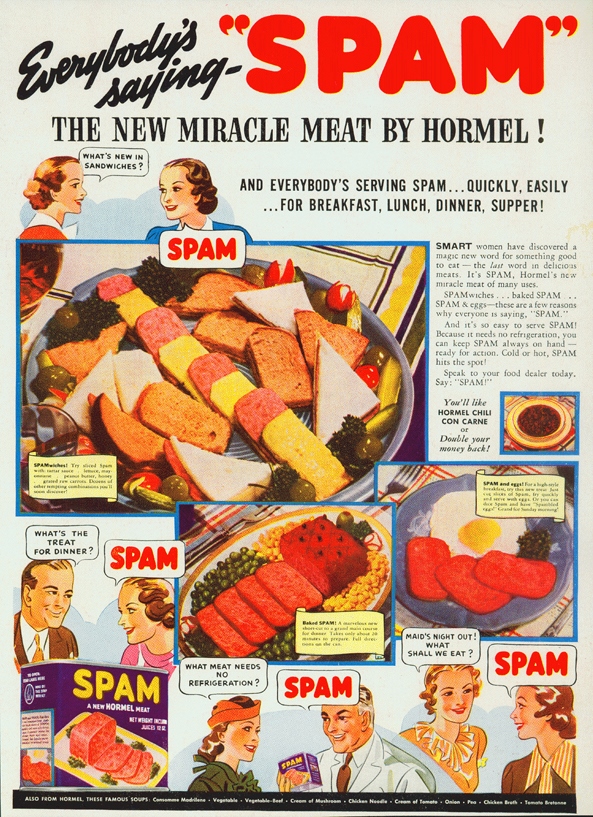
Spam…balaya, Crawfish Pie, Filé Gumbo….

“100% True Fact: Spam means; Sizzle, Pork and Mmmm. Someone tell me I’m wrong…”― Skylar Blue

SPAM actually stands for spiced ham according to its producer Hormel.

A pig trail ran through shredded Spam and scrambled eggs, twisted to lettuce, tomato, and Spam sammies, switched back to Spam and fried potatoes, to a now dead college chum and his recipe for Spambalaya. Johnny Bolt, you little bald-headed demon, I miss you, I do.

Miracle Meat not Mystery Meat

If you are newer to this earth, Spam is tech lingo for unwanted, unsolicited mass communications. While the term is most associated with email, it can also be used to refer to spam comments on blogs and social media, physical junk mail, robocalls, and more.

The newer description is an assault on a once proud delicacy created by Hormel in 1937 to sell more pork shoulder, the weakest selling part of the pig at the time. For those not in the know, pork butts are not butts but pork shoulder. Back in the day, they were shipped in what were known as butts (barrels), after being butchered in New England or Boston. That’s how they got their name, Boston Butts, but more importantly, they are the star ingredient in pulled pork barbeque…and Spam.

According to Wikipedia, Spam is sold in forty-one countries, trademarked in one hundred, and sold on six continents. It tends to freeze too easily in Antarctica I reckon. In the U.S., Hawaii is the state with the highest per capita consumption of Spam, which has become a major ingredient in Hawaiian cuisine.

Muriel Miura’s Hawaiian Spam Cookbook

Why did it become such a seller? During World War II, the U.S. government sent Spam to the troops because it was easier to deliver than fresh meat. It came precooked in a can, so it didn’t need to be refrigerated or cooked to consume, necessities under battlefield conditions.

By mid-war, Hormel was producing fifteen million cans of Spam for the troops each week. Hormel was buying 1.6 million hogs each year, and 90 percent of the canned goods were going to the military. After the war, soldiers returned home with either a taste or disdain for this odd product, and Spam has adorned grocery store shelves ever since.

We also supplied it to our allies including England and the Soviet Union. Soviet leader Nikita Khrushchev wrote in his autobiography, “Without Spam, we wouldn’t have been able to feed our army.” Before she became the English Prime Minister, Margaret Thatcher, a teen at the time called it, “a war-time delicacy.” “Spam the food that won the war!!!”

Spamville somewhere in the Pacific during WW 2

My father was a World War II vet, and he brought home a taste for the salty processed canned pork made primarily from pork shoulder and ham…with a bunch of nastier ingredients like fat, sodium, and preservatives. People were not deterred by its high fat and sodium content. Austin, Texas even celebrates it with their annual “Spamarama.”

During my childhood, we ate it a lot along with bologna, deviled ham, and Vienna sausages. We considered Spam to be a higher quality meat. Bologna, deviled ham, and Viennas were lunch selections, what we call dinner here in the South. Spam was reserved for a simple supper, the evening meal.

“Don’t knock it till you’ve fried it” was once a catch phrase for Spam. I honestly haven’t seen a Spam commercial since…well…since the last time I ate it which has run into decades ago. I don’t know why.

It is not a healthy meat choice, but I would say I wasn’t eating it well before I turned my lifestyle around after a 2006 heart attack. I’m not inclined to run out and grab a tin, but if I do, I might try Johnny Bolt’s recipe.

Johnny passed over a decade ago. Our lives first tangled in college the fall of 1968. He was a cocky little fellow, mostly bald by age eighteen. By the time his hair fell out, he had quit growing upward, topping off at about five-five.

When it came to playing the saxophone, he had an ego the size of a sperm whale. I was the only member of the saxophone section of our jazz ensemble that wasn’t a music major and played like it. Johnny was at the other end of the spectrum, and I guess I was a bit jealous. What is it they say? “It ain’t braggin’ if you can do it?” Johnny could do it.

We both became teachers; he was band director, and I became a science and history teaching football and baseball coach. It was inevitable we would run across each other when our schools faced off, but in the early Nineties, we found ourselves teaching at the same school.

It was at Riverside High School that the powers that were decided we should publish a “Cookbook” as a fund raiser. Johnny’s submission was “Spambalya so good it will make you want to slap your momma.” Before you ask, I did “Chicken Cooked in the Ground,” one of the only things I learned in the Boy Scouts.

As it turns out Johnny’s recipe for Spambalaya came directly from a Spam cookbook from the Fifties. Teachers are adept at stealing good lesson plans, why not a recipe? I did add some spices to “kick” it up a bit.

“Spambalya so Good it Will Make You Want to Slap Your Momma!”

Ingredients

1 (12 ounce) can spam luncheon meat, cubed (It called for lite, but I’d use regular. Why bother.)

1 tablespoon of vegetable oil

1 cup chopped onion.

2⁄3 cup chopped green bell pepper.

1⁄2 cup chopped celery.

A tablespoon of chopped garlic

1 (14 1/2 ounce) can diced tomatoes (use liquid from tomatoes)

1 (10 3/4 ounce) low sodium chicken broth (I use regular)

1⁄2 teaspoon dried thyme

1 1⁄2 – 2 teaspoons hot sauce (recipe read 6 to 8 drops)

1 bay leaf

1 cup long grain rice

1 tablespoon chopped parsley.

If you wish to add shrimp or chicken, please do.

Cajun spice mix, if you desire, and I would.

Directions

In a large non-stick skillet over medium heat, sauté spam until browned.

Add vegetable oil, onion, green pepper, celery, and garlic. Cook until all vegetables are tender.

Except for rice and parsley, add remaining ingredients.

Bring to a boil and add rice.

Cover, reduce heat and simmer for 20 minutes or until rice is done.

Remove bay leaf, and sprinkle with parsley.

Best served with an ice-cold pilsner beer. Put on some Zydeco and laissez les bons temps rouler.

***

I could not find a live version of Jambalaya On the Bayou. This will have to do.

Don Miller writes in various genres and on various subjects. His author’s page is found at https://www.amazon.com/stores/Don-Miller/author/B018IT38GM?ref=ap_rdr&store_ref=ap_rdr&isDramIntegrated=true&shoppingPortalEnabled=true

Of Fish Camps and Hush Puppies

“Good food should be joyful. There should be laughter and chatter, not people sitting there like they’re in a funeral-parlor waiting room.”- Jim Harrison

I’m having a moment. My wife brought me a meal from a local meat and three. Bless her heart. I applaud her efforts but the BBQed chicken gave its life for naught it would seem. The cabbage slaw, way too sweet. The hush puppies were awful, hard on the inside and even harder on the outside, but they triggered a memory which led to a pig trail. I’m sure there is a rabbit hole to fall into at the end.

Hush puppies are fried balls of seasoned cornbread batter. I like mine sans sugar with finely chopped onion and garlic mixed into the batter. A Southern staple served alongside anything fried or BBQ, they should be a golden, crispy brown on the outside and a creamy, moist yellow or white on the inside.

Supposedly hush puppies were fried up and fed to dogs to keep them quiet while fish were fried on the riverbanks where they had been caught as friends and family fellowshipped with each other. Thus, the name, “Hush puppies.” (According to Wikipedia, the name “hush puppy” or “hushpuppy” first appeared in print in 1899)

An alternative theory, a theory that is just as likely to be true, is that escaping slaves used fried cornbread to silence pursuing hounds and to throw them off their scent. Both work for me but the first theory follows better with my pig trail.

At some point hush puppies became a fish camp side dish, and my rabbit hole led me to a seafood platter featuring deep fried flounder or catfish fillets and Calabash shrimp along with mayonnaise slaw and hush puppies.

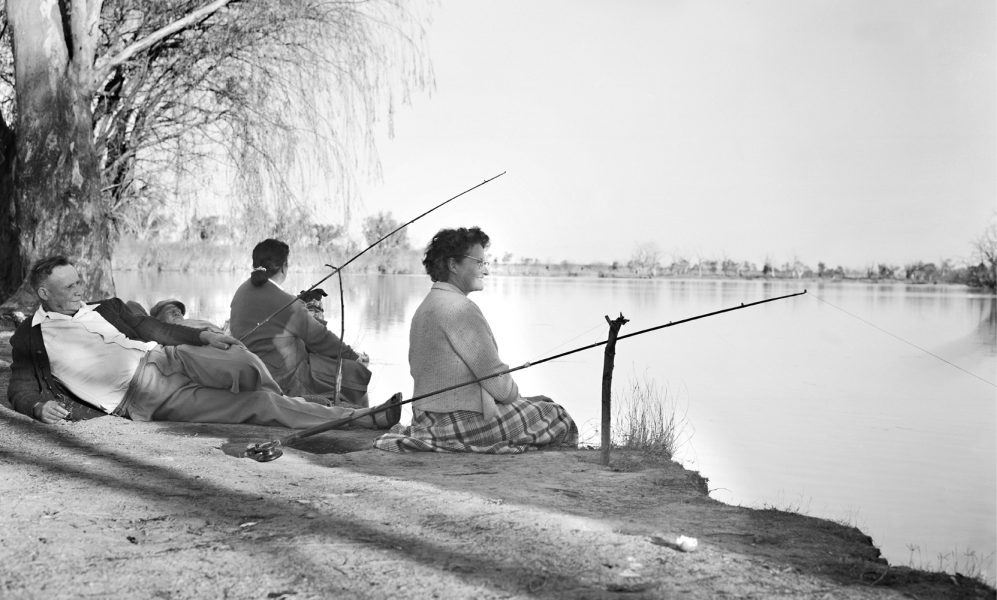
Fish camps gained popularity before World War Two and owe their beginnings to gatherings on the side of rivers or coastal shores, “creek camps” if you will. Everyone chipping in with fish caught that day, deep fried in seasoned batter, or pan fried after dredging in a seasoned cornbread and flour mix. The main course was served alongside cabbage slaw and hushpuppies. Simple food prepared cheaply, and might I say majestically, with a good dose of fellowship to go with it.

Enterprising souls saw a business opportunity, threw up rough structures, and served up deep fried fish on Friday and Saturday nights. As roads and transportation improved local catfish, carp, and crappy were replaced by flounder, shrimp, and oysters. The ocean’s bounty was transported to the upstate and served on Fridays and Saturdays.

Fish camps once were numerous on both banks of the Catawba River where I grew up. Cute names like “Catfish Cove” or simple ones like the Riverview Inn were prolific. The Riverview Inn featured its own pirate, Captain Windy, complete with a real peg leg but missing the eyepatch and parrot on his shoulder. I really don’t remember it as an Inn and my family was not there for the view. They once served a ton of flounder over one weekend.

In the Carolinas, upstate fish camps were tied to textiles and families. Many were family-run businesses that opened on weekends after the shiftwork of the week was completed. Textile workers flocked to the fish camps and visits to the fish camp became as routine as church on Sunday.

Unfortunately, fish camps are as scarce as hen’s teeth in my part of the world in the foothills of the Blue Ridge. Coastal Carolinas and Georgia have the fish camps, I’m sure Florida does too, but inland fish camps have dwindled into obscurity or become the pricier seafood restaurants.

I’ve been to some of the local ones claiming to be fish camps and if there are good ones, they remain hidden to me…nothing cheap or majestic about their offerings. My taste has changed or I’m still looking for the one perfect fish camp that existed in the late Sixties or early Seventies.

My fondest memory was a wreck of a building at the end of a hard-packed dirt road. A graying whitewash lapboard building covered by a rusty metal roof. Picnic tables with holes in the middle over a trash can to throw shrimp tails or oyster shells. The choices were simple; shrimp, fried or boiled, oysters fried or roasted, and the catch of the day which this day was deep fried flounder fillets. Sides were cabbage slaw, fries, and hush puppies with a hint of onion fried into them.

Squeeze bottles of tartar sauce and spicy cocktail were spaced conveniently around the table along with cheap paper towels to wipe your hands. Sweet tea or iced down PBRs washed it all down. Boiled shrimp and roasted oysters were served on newspaper, the rest in paper “boats.”

I remember a couple of “church” fish fries as a child. My humble Methodist church was a bit more “hellfire and brimstone” and had taken a page from our Baptist brothers. The best way to gather new members was through their stomachs. We just drew the line at requiring a casserole dish to enter Heaven’s Pearly Gates.

From down the road from my home, if the winds were right, late summer would bring the smell of fish frying during the annual camp meeting at the African Methodist Episcopal Zion Church that sat just off the Catawba on one of the creeks that fed it. Later, snatches of them making a joyful noise unto the Lord would be carried by the same breeze. Judging from the smell and the sound, they knew the way to heaven, even if it might have been heaven on earth, deep fried and seasoned by angels from generations past.

Fish camps and their predecessor, “creek camps” bode to a simpler time. Life revolved around work, family, and friends. Fishing was a form of recreation in addition to adding protein to the table. It was also a form of creation as many stories were told on the riverbank about the one that got away.

Combining necessity, recreation, and fellowship can’t be bad. Throw in a “jug band” and a bit of amber liquid and you might have hit on something.  

Don Miller’s Authors Page https://www.amazon.com/stores/Don-Miller/author/B018IT38GM?ref=ap_rdr&store_ref=ap_rdr&isDramIntegrated=true&shoppingPortalEnabled=true
Tastes Like Chicken

Shane Walsh: [about eating frog legs] When you get down to that last can of beans, you’re gonna be loving those frog legs, lady. I can see it now… [imitating Lori Grimes] “Shane, do you think I could have a second helping, please? Please? Just one?”

Lori Grimes: Yeah, I doubt that.

Shane Walsh: [to Carl Grimes] Don’t listen to her, man. You and me, we’ll be heroes. We’ll feed these folks Cajun-style Kermit legs.

Lori Grimes: I would rather eat Miss Piggy. Yes, that came out wrong.

Snappy Repertoire from The Walking Dead

Warning: This is not about The Walking Dead but about my addiction to cooking shows, food, and memories involving frog legs. They do taste like chicken.

Not that I’m ever going to prepare Chicken Kiev or Beef Stroganov, but I watch cooking shows allowing The Pioneer Woman to cause Pavlovian responses cooking brisket with cowboy baked beans featuring burnt ends or Giada De Laurentiis preparing anything. Just stand there Giada, just stand there. Another type of Pavlovian response.

My thoughts raced down a pig trail after a conversation with a Northern friend about what we might have eaten at a restaurant had it been named the “Roadkill Café.” Much of our banter centered around squirrels and possums along with my favorite saying, “flatter than a toad frog on a four-lane highway.”

I pointed out that I had grown up “country rich”, never having to resort to roadkill. I admitted to having been permanently scarred for life cleaning fish and turtles, plucking and gutting chickens, skinning squirrels, and slaughtering hogs to supplement the protein requirements of our diets.  I feel fortunate my family drew the line at possum. I did occasionally eat frog legs, the subject of this rabbit hole I fell into.

Later in the day, as I looked for a recipe for fried frog legs, I stumbled across a YouTube video featuring one of the Duck Dynasty boys preparing frog legs. I watched it. Fifteen minutes of my life I’ll never get back. I realized frog legs may taste like chicken, but no one ever shows the nasty side…gigging and skinning little green Kermits or wringing little Henny Penny’s neck.

For some reason, the video reminded of a young lady whose bright light had burned out, who asked, “Why do people raise beef? We can go to the supermarket and buy it.” I’m sure there is a logic there that only she understood. I’m also sure one can find pre-skinned frog legs somewhere but somewhere else there is a frog walking on stumps.

I was first introduced to frog legs when I was quite young. An uncle home from college and a couple of cousins had spent the night gigging frogs…and I suspect, participated in activities my grandmother would have frowned upon involving distilled spirits. Still, they were sober enough to deliver a croker sack of frogs to my grandmother who skinned them and prepared them along with grits and eggs for breakfast.

I remember awaking to the smell of something I was unfamiliar with frying. Sautéing frog legs heavily peppered were literally twitching in butter in a big cast iron frying pan. They were twitching, I kid you not.

Gross alert, view at your own risk

Did you know that Mary Shelly was inspired by twitching frog legs while writing Frankenstein? Sorta inspired. The frog legs weren’t frying but according to the Smithsonian Magazine, Shelley was inspired by the concept of galvanism—the idea that scientists could use electricity to stimulate or restart life. Galvanism, using an electrical current, would cause frog legs to jump. Feel smarter? I wonder if they fried them afterwards.

The French consider frog legs to be a delicacy, but this, according to differing theories, has nothing to do with calling the French the derogatory term, Frog. It is more likely due to the Frog that was a part of the counter-revolutionary flag flown during the French Revolution. No matter what theory do not call a Frenchman a Frog. It’s not nice.

While I was in college, I went gigging with a couple of fraternity brothers and a chemistry teacher. In a flat bottomed jon boat, armed with gigs and flashlights, we paddled the perimeter of a small lake looking for little green eyes glowing in the reflection of our lights. We would paddle in close, gig the frog, and put him in our own croker sack. We might have partaken of some distilled spirits like my uncle but I’m not sure.

All was grand until a snake crawled into our boat. Instead of using an oar to stun the snake and put him back into the water, one of my frat brothers pulled a concealed pistol and put three bullet holes in the bottom of our boat.

The snake? Perfectly safe and still in the boat under the croker sack. The rest of us? Paddling for dear life to get back to the landing while avoiding the snake before we sank. Since that time, I’ve not gone frog gigging again and have only eaten frog legs on an all you can eat seafood buffet a hundred years ago.

It seemed safer to look online and inquire where I might find some preskinned frog legs. Ten dollars a pound plus shipping? Imported? Geez. I guess that is why they are a delicacy. Well since chicken also tastes like chicken, I think I’ll grill up some wings instead.

An excellent recipe for frog legs or chicken wings https://foodchannel.com/recipes/cajun-fried-frog-leg-recipe

The Food Channel

Don Miller’s authors page can be found at https://www.amazon.com/Don-Miller/e/B018IT38GM?fbclid=IwAR1rEhMYcMA8cZ4B9q3hI4Csq2sS3MBrJdAEpNjnvu1wqcIuf_yHjBO_HtY

Smells Like Chicken

“But my heart’s running ’round like a chicken with its head cut off

All around the barnyard, falling in and out of love

The poor thing’s blind as a bat, getting up, falling down, getting up

Who’d fall in love with a chicken with its head cut off?”

“A Chicken with its Head Cut Off” by the Magnetic Fields

I’m prone to follow my thoughts as they fall into a rabbit hole, diving in to see what is at the bottom. I’m not sure this was a rabbit hole. It was more a black, iron kettle sitting on a fire, water rolling, and steam rising. At some point, I realized I smelled like chicken.

I was lying face-down on an operating table while my dermatologist removed the latest squamous cell carcinomas from my calf. This was the third or fourth in that location which joined the two on my ear, and a couple on the thigh of my opposite leg. That has nothing to do with the story exactly, but I wish I had kept up with my total number of stitches during my lifetime. Seems like I’m always cutting something or getting cut upon.

The calf had been numbed and the doctor’s touch was light. A little pressure he said, no pain. It couldn’t have been much pressure and there was no pain. I was just at the point of falling asleep when he began to cauterize the bleeders. It was the smell of my own toasting flesh and singed leg hair that brought me back and took me back to my childhood.

Back to a boiling black cauldron of water and the poor chicken that was about to give her all so I could eat a chicken leg for supper.

Periodically my grandmother, Nannie as we all called her, would begin a fire outside, under a big, black, iron caldron. As the water heated, she would pick up her ax and head to the chicken coop. Gothic chicken horror music should be playing in your head. A less than productive egg producer was about to die.

We were meat eaters, and the death of farm animals was a common occurrence. It wasn’t kept a secret from the children. There were no worries about our delicate sensibilities. We knew how the meat, fish, or poultry ended up on our plates. We had been warned about naming our animals, but I still found it sad when Bacon, Sausage or Henny Penny went to meet their maker. Sad until those pork chops or chicken legs hit the frying pan.

 I would follow my grandmother to the coop realizing a macabre sight was about to unfold.  I didn’t find joy in the occurrence, but I knew there was something odd about chickens with their heads cut off running about willy nilly before finally flopping over. I remember when I first studied the French Revolution. I truly wondered if King Louie XVI or his wife, Marie Antoinette, ran around like a chicken after their beheading. Truth, I kid you not. I was just a stupid kid.

After the beheading, Nannie would take the chicken and dip it in heated water for five or ten seconds and begin to pull feathers. If they were too hard to pluck, she would continue to dip the chicken into the water until she had supper plucked. Then she would dry the chicken and with a burning piece of wood, singe the pin feathers off before gutting and butchering. That was the smell triggering my memory.

The memory came when the smell of my own burning skin and hair hit me. The memory was as if I was there, sixty years ago. Not pleasing…smell or memory. The memory of frying chicken battered and turning brown in Crisco is a much better memory. I can smell it now and a Johnny Cash tune is running in my head. Or it might have been Kris Kristofferson.

“Then I crossed the empty street

And caught the Sunday smell of someone fryin’ chicken

And it took me back to somethin’

That I’d lost somehow, somewhere along the way”

I haven’t lost the memory of a chicken leg, crunchy on the outside and moist on the inside. The memory is quite pleasing. Colonel Harland Sanders, eat your heart out. She did more with chicken coated with flour, salt, and pepper and shallow fried in Crisco than any of your secret recipes.

From the Johnny Cash Christmas Show, 1978

***

Postscript: Except for the smell, everything went well. I got to add twelve stitches to my total and am recovering with just a bit of discomfort.

Don Miller writes in multiple genres, both fact and fiction, and combinations of both. His latest is “Pig Trails and Rabbit Holes” which may be purchased or downloaded at https://www.amazon.com/Pig-Trails-Rabbit-Holes-Southerner/dp/B09GQSNYL2/ref=sr_1_1?crid=TKS6SAC9M2I9&keywords=Pig+Trails+and+Rabbit+holes&qid=1647603975&s=books&sprefix=pig+trails+and+rabbit+holes%2Cstripbooks%2C2247&sr=1-1

Collards and Black-Eyed Peas, the Witches Brew

I asked. “What do witches eat?” “Witches loves pork meat,” she said. “They loves rice and potatoes. They loves black-eyed peas and cornbread. Lima beans, too, and collard greens and cabbage, all cooked in pork fat. Witches is old folks, most of them. They don’t care none for low-cal. You pile that food on a paper plate, stick a plastic fork in it, and set it down by the side of a tree. And that feeds the witches.”

Midnight in the Garden of Good and Evil— John Berendt

It is a witches brew that feeds Southerners who aren’t witches, especially on New Year’s Day. Gather ‘round children, your social studies lesson is about to begin.

Southern culture is steeped with superstition, from painting our porch ceilings “haint blue” (Gulla/Geechie) to protect against evil spirits, to hanging a mirror beside our front door (Appalachian) to occupy the devil. Another superstition involves the love for black-eyed peas and collard greens and their relationship to luck and prosperity.

Eating collard greens and black-eyed peas on New Year’s Day are a Southern tradition that has spread to other parts of the land, south to north and south to west and the historian in me loves to ask the question, “Where did the tradition of eating collard greens and black-eyed peas on New Year’s Day originate and why?”

As with most “ancient” history, there is “gracious plenty” speculation and like all histories, are written by the victors or at least by those people who remained in power.

We Southerners can all agree that peas are the embodiment of blessings or luck and collard greens, prosperity but how did it get to be that way? Why did it spread so widely?

Peas are the oldest of the New Year’s traditions, used by Jewish folk to celebrate the New Year as far back as 500 AD. The Jewish tradition of eating black-eyed peas for fertility and luck continues today during the Jewish New Year some 2500 years later. Our Southern tradition doesn’t date that far back but is just as strongly embedded.

The origin is not as clear-cut in the Southern United States. According to “some” White Southerners, peas became a New Year’s staple because of that dastardly General William T. Sherman and his infamous “March to the Sea” during the Civil War. According to “some” historians, Sherman deemed salt pork and dried peas to be unfit for human consumption and left them behind, giving starving Southerners and Confederate soldiers a “blessing” as they were “lucky” enough to have it to stave off starvation.

In another tradition, Black Southerners, read slaves, made black-eyed peas a staple for New Year’s celebrations because the Emancipation Proclamation went into effect on January 1, 1863, and black-eyed peas were their only abundant food source.

Once considered a crop fit only for livestock, starving Southerners of both races consumed black-eyed peas out of necessity and transformed them into a symbolic and well-loved tradition.

I’m sure there is truth in both stories but what I know as truth, black-eyed peas in the United States date from the time slaves brought them from Africa. Black-eyed peas became so pervasive throughout the old slave states that black-eyed peas appear in recipes as varied as Cowboy Caviar down in Texas to Hoppin’ John in South Carolina to Peas with Ham up in North Carolina.

Dried beans of all varieties have been a staple, certainly a staple in my childhood, of Southern cooking especially during the dismal, gray days of winter and have a quality of taste that far surpasses those canned today. They were never used as livestock food during my lifetime unless the cow got loose in the pea patch. In my grandmother’s kitchen, dried peas were sorted through, washed, and then allowed to soak in water overnight before being rinsed again and put on to cook with salt, onions, garlic, and, of course, pork fat.

Collard greens are a bit more straight forward. Collard greens, along with their cousin turnip greens, are typically one of the only fresh vegetables that you can find in January in the South, so their place in the New Year’s food bill of fare is quite practical. They are also inexpensive and nutritious. More importantly, they are quite tasty when cooked in bacon grease, salt pork, or with ham hocks and seasoned with red pepper flakes and vinegar to add a little heat and tartness.

How collards came to be regarded as a precursor to prosperity is unknown, except that collard greens are green like paper money. I have been told “every mouthful of collard greens is worth a thousand dollars in your pocket.” For this reason, greens have replaced cabbage or sauerkraut in most Southern New Year’s celebrations.

With all that pot liquor created from cooking you must have something to sop it up with and that leads us to cornbread, corn being a staple in the South, both for animal and human consumption. Over time I have come to believe that cornbread makes us stop and remember what we have and where we came from. It harkens to our “roots.” Pones of cornbread prepared in cast iron pans passed down from the generations before us and seasoned by the hands of angels no longer with us. Rich in flavor, yellow in color, this bread has been compared to the color of gold and thought to bring good fortune and wealth.

Every Southern supper (dinner to you Yanks) involves a protein and hogs were the cheap staple even if you ate “high on the hog.” Slaves, later freemen, and poor white farmers alike found ways to prepare lesser cuts, making them palatable to the point of being preferred.  Hog jowls or ham hocks are slowly cooked, the meat picked out before being added to collards and peas already cooked with salt pork. Spareribs slowly cooked over a barbacoa, I’m salivating a bit.  One tradition says that a pig cannot turn its head, which means it’s always looking forward as we should be looking to the future.

How peas and collards culturally diffused to parts north and west is easy to understand and troubling for a progressive Southerner. The Great Migration was one of the largest movements of people in United States history. Six million Black people moved from the American South to Northern, Midwestern, and Western states from the 1910s until the 1970s.

The driving force behind the mass movement was to escape racial violence, pursue economic and educational opportunities, and obtain freedom from the oppression of Jim Crow in my beloved South. With their migration they took their culture and their traditions and passed them on to other folks. Traditions that included black eye-peas and collards. Traditions that added vivid colors to the canvas of life in the United States.

I have been lucky, and blessed, if not rich…rich monetarily that is. My life has been filled with richness attributed to family and friends, acquaintances, and students I taught and coached. The people I have been lucky enough to run across in my seven decades on earth. I don’t know how much to attribute to eating black-eyed peas and collards, dumb luck, or a benevolent Supreme Being. What I most appreciate are the diverse traditions and the diverse people who make me smile and add richness to my own off-white canvas.

My hope for the New Year is that we all will celebrate a newfound prosperity, monetary or otherwise, good luck, good health, and peace. Peace from Covid, war, and peace in our own lives. I hope the New Year brings people together with understanding rather than forcing them apart with disinformation.

Happy New Years from the Foothills of the Blue Ridge. Enjoy your peas and collards.

Sources:

https://www.southernliving.com/holidays-occasions/new-years/new-years-traditions-black-eyed-peas

https://www.gastonoutside.com/post/collards-and-black-eyed-peas-the-history-of-new-year-s-day-food-and-where-to-find-it-in-gaston

https://www.archives.gov/research/african-americans/migrations/great-migration

https://www.allrecipes.com/article/how-to-cook-dried-beans/

And a lifetime living in the South.

Don Miller’s latest nonfiction release is “Pig Trails and Rabbit Holes,” a collection of short stories and essays on life in the foothills of the Blue Ridge. It can be purchased in paperback or downloaded at https://www.amazon.com/Pig-Trails-Rabbit-Holes-Southerner/dp/B09GQSNYL2/ref=sr_1_1?crid=FXC3AISNRIU7&keywords=pig+trails+and+rabbit+holes&qid=1640701551&s=books&sprefix=Pig+trails+an%2Cstripbooks%2C299&sr=1-1

An Affront to my Southern Sensibilities

“I’m always sketchy of people who don’t like grits.” – Author: Jaycee Ford

I have many Yankee friends along with those from other parts of the country.  Good folks are good folks no matter where they come from…except when it comes to food…or harping on perceived Southern backwardness which, unfortunately includes our Confederate past and the original sin of slavery and the Jim Crow that came after it.  Don’t pontificate because Southerners authored the book on pontification and when you speak to me about fried food or our original sin you are preachin’ to the choir. 

If it is backward to revere the callused hands of our forefathers then, yes, we are backward, but most of us are not the repressive, inbred, missing more teeth than we have, morons we are portrayed to be. 

We have a gracious plenty of those repressive, inbred morons and I’m missing a few teeth myself, but for most of us, Southern identity has more to do with food, accents, manners, and music than our Confederate flag flyin’ past. I did date a distant cousin once upon a time but only because pickins’ were slim… The emphasis should be on distant and not on cousin. We did not inbreed, nor did we breed in the backseat of my ’63 Ford.

In my circle of friends, Southern identity is open to all races, a variety of ethnic groups, and people who moved here from above the Mason-Dixon.  It incorporates more than “South” Alabama or Texas but includes Southern France, Southern Italy, Southern Asia, and any other country you can describe as “South” of anywhere. West Africa, which is south of the South, made an even greater contribution I should add especially when talking about food and music…or our original sin.   

In all honesty, the repressive morons are just the most vocal as they watch their way transition to the chamber pot of life.  They are not the most numerous. It’s just the rest of us are silent, sitting quietly thinking, “Well, bless your heart.”  We should be more vocal and drown them out and the “bless your heart” in this case is a negative comment.

Still, my Yankee friends, there are limits to my Southern sensibilities, mostly those limits involve food…especially this time of year.

I am a day from the first of my three annual physicals and food is on my mind.  October, the fright month, and I’m not speaking of the horror of Halloween and candy corn.  I’m speaking about the blood work that will be done, the weigh-in, the blood pressure check, the electro-cardiogram with its ice-cold electrodes applied with Gorilla Glue, the body scan to see if any more skin cancer is eating me alive.  It will be the yearly reckoning and one that has me tighter than a tick on a fat dog.

I’m a week away from “paying the piper” for a lifetime of excess.  Platters of “Southern” fried chicken and catfish, oversized cathead biscuits smothered in creamy sawmill gravy, salty pork rinds, cigars, and brown liquor.  Since my heart attack in 2006, my diet has been limited to mostly leaves and cardboard, the seasonings removed from the angelic hands of my ancestors and replaced with a bit of shaken Mrs. Dash. 

Little fried, little creamy, little salty, limited cigars and little brown liquor…well, brown liquor can be used for medicinal purposes, and I light the cigar to smell it more than I smoke it.  The keyword is little as in much less than I might wish, so, my sensibilities are affronted when my Yankee friends try to school me on “good” food. 

It could be I’m just amid a bacon grease withdrawal. For instance, and in no order:

Throwing away the bacon grease instead of using it as a “flavorin’.”  Blasphemy! Bacon grease should be stored in a coffee can right on the stovetop for easy access.  Bacon grease is culinary “gold.” Eggs fried or scrambled in bacon grease, greens or beans sautéed in bacon grease and then cooked to death. Bacon grease cooked in bacon grease.

Biscuits and creamy sawmill gravy are most certainly a main course and biscuits running in butter and honey are a dessert. To say otherwise could end a friendship.

It is Duke’s Mayonnaise, or it is nothing. If I have a choice between Hellman’s or Miracle Whip, I’ll look for mustard to put on my tomato sandwich.  Yuck.  Sidenote, tomato sandwiches should be served on soft, white bread.  Save your multigrain for Reubens and such.

Also, I am well-read.  I know a tomato is a fruit and not a vegetable in every state of the union save one.  It is a vegetable in South Carolina by legislative decree. As if my legislators have no better use of their time.

Don’t serve grits from those little brown packets that you microwave with water and then gripe about how bland they are.  Grits are a blank canvas.  They should be stone ground, cooked with cream, and at the minimum contain cheddar cheese and butter.  And please, just serve me the box that the packets of “flavored” grits come in.  Addendum: Grits should never be served with sugar. 

I’ll drink water from a stagnant, primordial swamp before I drink unsweetened tea.  It should be served sweet with lemon slices to sour it up. One more Southern paradox?

Instant tea? Just shoot me.

Chicken fried steak and country fried steak are not the same.  Chicken fried involves egg batter, country fried a dusting of flour only.  Note to prospective cooks, I’ll eat either and smile.

Don’t ask me to come for the barbecue and then serve hot dogs and hamburgers.  That’s grillin’.  A barbecue is not a place. Barbecue is slow-cooked pig parts over wood coals.  Barbecue is a noun, not a verb.  Note:  If you want to serve some of those German sausages in addition to the slow-cooked pig parts that will be fine with me.  Put it in a bun and you can pretend it is a hot dog and I’ll be okay.  I’ll even eat one. 

Mac and cheese should not come from a little box that contains everything you need to make it taste like noodles and Velveeta and nothing else.  Good mac and cheese is not orange in color.  It is a cheesy crisp brown on the outside and at the corners and creamy and pale on the inside.  It contains more than just mac and cheese. Addendum:  It is also perfectly acceptable to list good mac and cheese on the vegetable menu of your local ‘meat and three.’

Side note: good cornbread doesn’t come from a package or a box and “nanner puddin'” should not be made with instant pudding.

Finally, viewing Southern food as only fried chicken, pork, or fish and biscuits is a great over-simplification. The Southern food of our forefathers was plant-based.  Granted, many of those plants were fried or flavored with bacon grease or fatback and very well-seasoned. Staples included stewed okra and tomatoes, whole-grain cornbread, winter greens, corn, butterbeans, sweet potatoes, and both winter and summer squash. Fried meat, poultry, or fish served daily is a modern contrivance. Certainly, there are Southern dishes that are indulgent, but indulgent food is found in any cuisine.  Beef Stroganoff anyone?

Postscript: My first battery of test came back great. My cholesterol was 121. Biscuits and gravy here I come. I’ve got a year to work it off.

Don Miller’s newest book is live on Amazon and may be purchased in paperback or download at https://www.amazon.com/dp/B09GNZFXFT

As American as BBQ

“Forget baseball, apple pie, and Chevrolet.  For a Southerner, it is barbeque.”

Let’s clarify immediately and with great fervor, barbeque is not an event; it is a dish. I don’t care what our Northern neighbors say.  It is not a backyard gathering.  You don’t go to a backyard “barbeque.”  You go to the backyard to eat barbeque. Barbeque is a dish created by the soft whispers of the angels who trod before us and is as close to heaven as I wish to get until death.  Good barbeque is a gift from heaven…it is not a place. Be reverent my children.

It is the morning of July 5th and as I write this, I’m in a barbeque coma courtesy of Carolus’ ribs and Jamie’s pulled pork…and potato salad courtesy of Carol Ann.  Other significant coma contributors included blueberry cobbler and brown liquor.  There were many other contributors and only contributions I would have added would have been mayonnaise and vinegar slaw and hash over white rice but that is a personal choice and not a coma breaker.  It is a tip of the hat to my roots where barbeque came with mustard sauce and helpings of hash over rice.

It was the first Bennett family Fourth of July backyard cookout in two years.  The Bennetts are our adopted family and I’m not sure who adopted whom.  It was good to see folk we hadn’t seen in two years even though there was a bit of “post-Covid” trepidation.   Sitting outside under shade trees and swapping stories soon reduced my anxieties…or maybe it was the brown liquor.

Backyard cookout.  See how I said that?  A backyard cookout.  You go to a cookout…not to a barbeque.  You don’t even have to serve barbeque at a cookout, you can grill things like pork, chicken, beef, roadkill, or tofu.  But grillin’ ain’t barbequin’.  Barbeque is slowly cooked animal parts, pork in my part of the world, over wood coals.  Slow cooked until the meat just gives up and shreds easily with two forks or falls off of the bone without any help from anything other than gravity.  Sometimes eating high on the hog involves parts found low on the hog.

There is a certain barbeque etiquette.  None etched in stone, and it varies from place to place but it would behoove you to learn the area’s rules before attending a cookout serving barbeque.  See how I said that? 

Generally, the rules involve sauces, rubs, or sides.  It can involve the meat, Texas is mainly beef, for instance, other areas might be a goat or lamb, yuck, but here in South Carolina, it is pork.  I reckon we all eat chicken and you can slow cook yard bird.

There are sauces and then there are sauces.  Nothing to argue over.  Pick one or experiment. Sauce varies here in South Carolina.  Vinegar base, pepper base, both together.  Mustard base, light tomato base, heavy tomato base, depending on the area.   In the home of my mother, the general rule was a mustard sauce with pork, tomato sauce with chicken.

The mustard base is considered by many to be truly South Carolina’s sauce…may be.  German immigrants brought it from the Fatherland to the midlands.  Our new visitors told the older inhabitants they were from Deutschland, which was mistaken as Dutchland, and the reason the fork between the Broad and Saluda Rivers became known as the Dutch Fork. Dutch Fork…Deutsch Fork…”You say toe-may-toe, I say toe-mah-toe.”

The mustard sauce changes to vinegar and pepper sauces on the coast, light tomato, which is vinegar and pepper with tomato added, in the Pee Dee area, heavy tomato in the West and Northwest portions of the state…with a bit of brown sugar, root beer, or brown liquor added…sometimes.  People are mostly steadfast in their allegiance to one sauce although I admit to experimentation on occasion.  If a person serves you an exotic barbeque sauce like that Alabama White Sauce, thank them even if you don’t like it.  It is the Southern way and good etiquette.

Steadfast allegiance but I’m not willin’ to fight a Civil War over it.  No one should argue over sauces.  It is almost like arguing about politics except with politics no one wins.  With barbeque, everybody wins.  Just don’t drown the meat in the sauce.    It is meant to enhance the flavor, not cover it up…unless it is bad barbeque.  One rule etched in stone: Never pre-sauce a sandwich.  The amount of sauce is a personal choice.

Sides?  I’m guessing we could argue all day. In the South, potato salad is a must.  Corn on the cob, fried okra, baked beans, and dill pickles are quite acceptable.  I fancy the pickled medley that includes pickled cauliflower and pearl onions.  Just don’t call it giardiniera.  Sounds too fancy for barbeque and you can leave the pickled carrots out of mine.

To slaw or not to slaw, that might be the question?  I think slaw is a genetic thing.  You are born to put slaw on your pulled pork sandwich, or you are not.  Kind of like sugar or vinegar or mayonnaise in your slaw.  Me…vinegar and mayonnaise and yes, I want it on my sandwich.

Hash or Brunswick stew?  It is pretty much Brunswick stew everywhere other than the Carolinas. Once again, everywhere else is wrong.  It’s hash always.  Unrecognizable pig products cooked with potatoes and onions until they meld together with certain spices passed down by the ghostly hands of our past. Served over rice…white rice of course.

What is not up for debate, fellowship.  You shouldn’t eat barbeque with someone you don’t like which brings me back to the Bennett clan.  I like the Bennett clan.  I taught with the patriarch, Carol Ann, and coached and taught her two sons Jamie and Carolus.  Through them, my bride and I have become members of their extended family.  I’m honored to have been invited to their July 4th celebration. Barbeque reminds me of home and the Bennett clan reminds me of family.  It just doesn’t get much better than that.

I need to take a nap.  My barbeque coma is about to win out.

Barbecue or Barbeque.  I spelled it barbeque because it is a bit archaic, like me, and because it was spelled that way where I grew up.

For books by Don Miller https://www.amazon.com/Don-Miller/e/B018IT38GM?fbclid=IwAR3xEUv3gUa4wrDNp0oXEa2Rbv1hcunRf64Zlr3wl2hNbsCYZwGlgIDwNqw

A Funeral Without a Casserole is Just a Funeral

Southern funerals have always been equal parts family reunion and social gathering. I think it dates to the days when Southern families were so spread out and isolated.  It was a chance to reconnect and be social even if it was a sad event. It was time to serve those who needed it the most.

You can’t have a social gathering without food whether it was a cotillion or a funeral. Funerals were where the “church ladies” came in and ran the show.  They may not be allowed to be preachers or deacons but in times of need, they are the backbone of the church.  All the while, wearing their pearls and white gloves, their little pillbox hats on their blue-white heads.  They all seemed to smell of lilac or gardenia and had names like Miss Agnes or Miss Minnie. 

I know every section of the US has its own set of traditions, but the South knows…or knew how to do “grief” food.  With the gathering of friends and out-of-town family, the grieving family didn’t need to worry about preparing food.  This was a time to tell stories and relate memories associated with the deceased. Maybe even tell a joke or two if the dearly departed is the butt of it.  “You remember when ole Earl blew up his still?  Told him he ought not to hide it in the chicken coop.  Chicken feathers was flyin’ everywhere.” 

It’s not a time for the grieving family members to be planning menus.  Enter close friends and the “church ladies.”  Bless their little blue-haired heads.

Platters of food begin to arrive before the body is cold.  A half dozen versions of fried chicken, everyone’s Grandma “So and So’s” deviled eggs, mac and cheese, and “forty-leven” different deserts ranging from red velvet cake to banana puddin’.  It is as if they had prepared ahead of time just in case someone died. Do good Baptists have a casserole frozen and stashed away just in case?

“You know, old Earl looked kinda peeked at church Sundee.  I’m gonna make this caramel cake usin’ Grandma Earlean’s recipe just in case he kicks the bucket.”

Comfort food in a person’s time of need.  There is a reason comfort food is called comfort food.  It makes you feel better in the worst situations until you step on the scales or feel that sudden “There’s an elephant sittin’ on my chest” feeling.  This is of no concern to the church ladies and when the body has made its final six foot trip, there is room for one more meal. 

Doesn’t matter that the grieving family can’t close the refrigerator door for the casserole dishes or that both the microwave and convection oven are filled with six different versions of the same protein.   The post burial meal must be observed.

More mainstays are laid out. Fried chicken, again, or maybe, baked ham, more deviled eggs, more mac and cheese, a dozen congealed salads, what we called Jell-O salad, and several different potato salads.  Depending upon the time of year, fried okra or fresh creamed corn might find a place at the long tables covered in white linen tablecloths. 

A church lady directs us down both sides of the table as soon as the grieving family is served and settled…and  in a stringy, sharp voice and pointing a white-gloved finger, “Y’all the desert table and sweet tea are over yonder.”  She nudges me, “You better hurry if you want some of my chicken pot pie. I knows how much you like it! And get you some of Miss Sally’s banana puddin’ before it gets gone.”  Can’t fault her, Miss Mamie was correct.

How many casseroles can there be?” Several dozen casseroles of different types it would seem.  I’m sure the church ladies formed a telephone chain,  in fact, in distant times, they may have been on the same party line. “I’m gonna do a green bean casserole if I can find that can of Campbell’s Mushroom Soup and a can of those fried onions.  Why don’t you do broccoli?”  Or squash, or funeral potatoes, or chicken pot pie, or if someone is creative or from the low country, chicken bog.

This is the way it should be, comfort food for the grieving, but something has gone amiss. 

I found myself at a recent funeral.  I could not believe it…I refuse to believe it! 

Chicken provided by KFC and Bojangles.  What?  They didn’t even take it out of the box. Hard ole biscuits and that watery potato salad. Slaw so sweet it set your teeth on edge. I didn’t even try the tea. I know we live in different times but this…this…this is sacrilege. “Blasphemy I say!!!!” And this was in a Southern Baptist institution. 

Not even one, three-quart casserole dish with a name taped to the bottom.  What have we come to?  What have we become? Where is the banana pudding?

I can’t believe the lack of respect shown for the dearly departed family. I didn’t know the family. I just stopped in for the food.

More of Don Miller’s ramblings may be found at https://www.amazon.com/Don-Miller/e/B018IT38GM?fbclid=IwAR3gtYqKmk1eSIHBoTiQc5rg12E6_7eZY6AHLuMDN323mC4bdmKMRfn-fKY

The image is of a traditional “funeral” potato casserole.